 |
PERSIAN
EMPIRE
ACHAEMENID KINGS SILVER SIGLOS |
 |
|
465-330 BC |
VG | SEAR-4680 |
BIBLICAL COINS & ARTIFACTS
(Please click on any thumbnail photo for a larger image)
BIBLICAL COINS:
COINS BEFORE THE NEW TESTAMENT PERIOD:
|
|
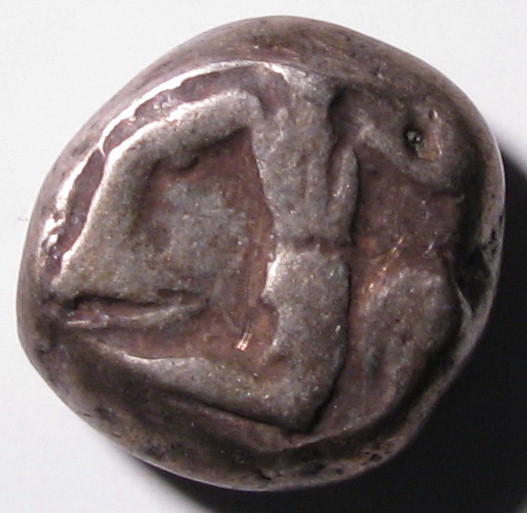
PERSIAN
EMPIRE
ACHAEMENID KINGS SILVER SIGLOS |
|
|
465-330 BC |
VG | SEAR-4680 |
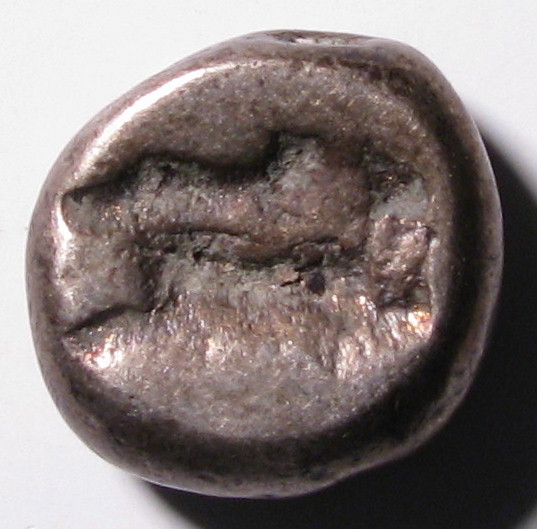
The Persian king Artaxerxes, who ruled from 465-425 BC gave a large quantity of silver and gold to be used for re-building and repair of the Temple at Jerusalem. Much of the silver would have been in the form of these coins.
This coin is 14mm in diameter and weighs 5.8g. It shows a kneeling Persian archer on the obverse and has an incuse punch on the reverse.
EZRA 8:26 "I even weighed unto their hand six hundred and fifty talents of silver, and silver vessels an hundred talents, and of gold an hundred talents"
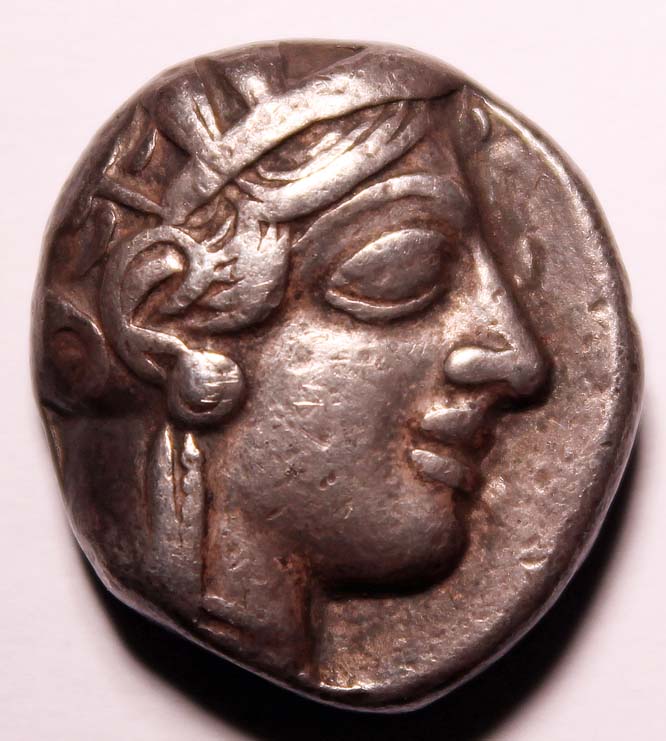 |
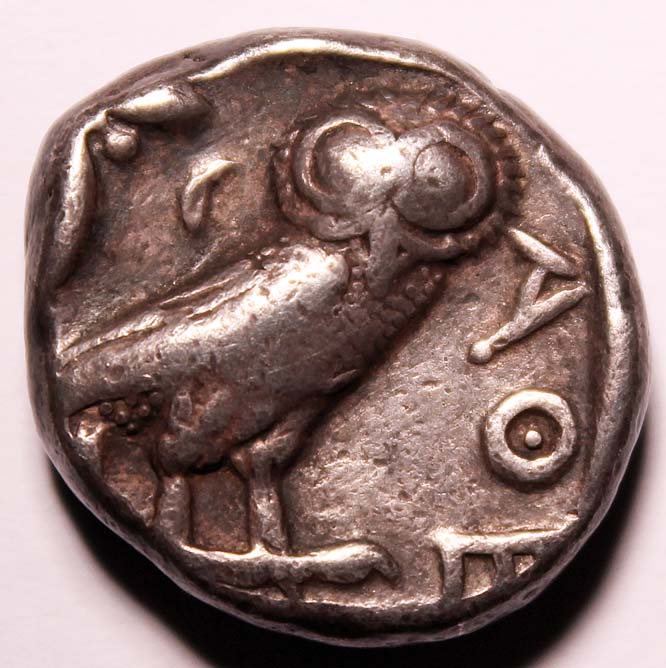
ATTICA
ATHENS SILVER TETRADRACHM |
 |
| BC | F | SEAR- |
 |
MACEDONIA
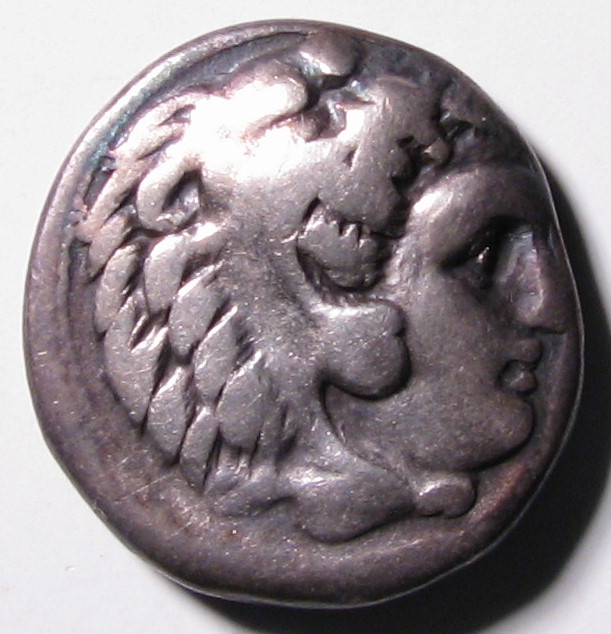
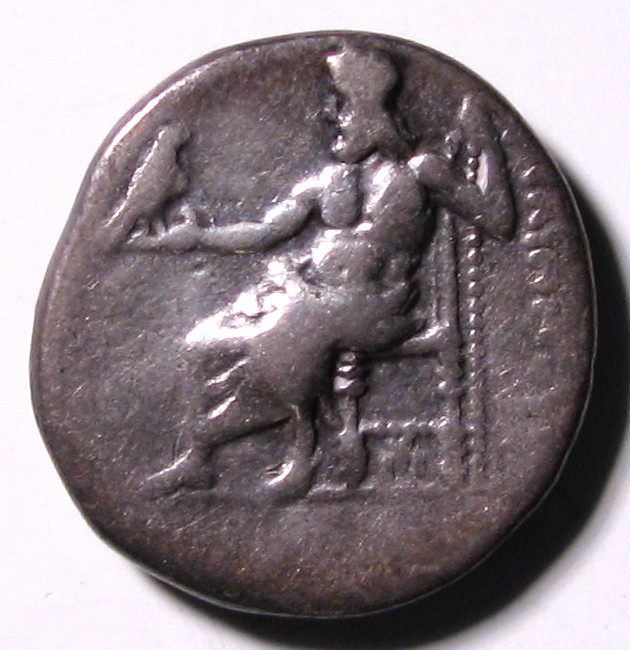
ALEXANDER THE GREAT SILVER DRACHM |
 |
|
336-323 BC |
VF | SEAR-6730 |
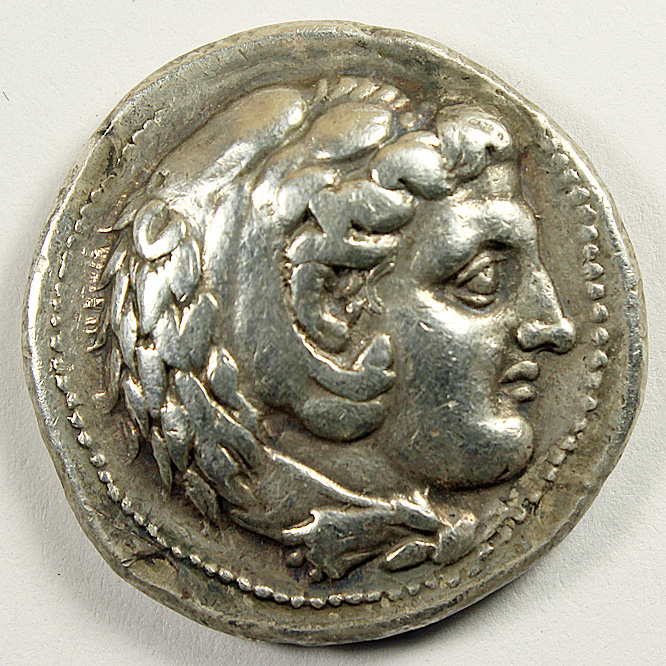
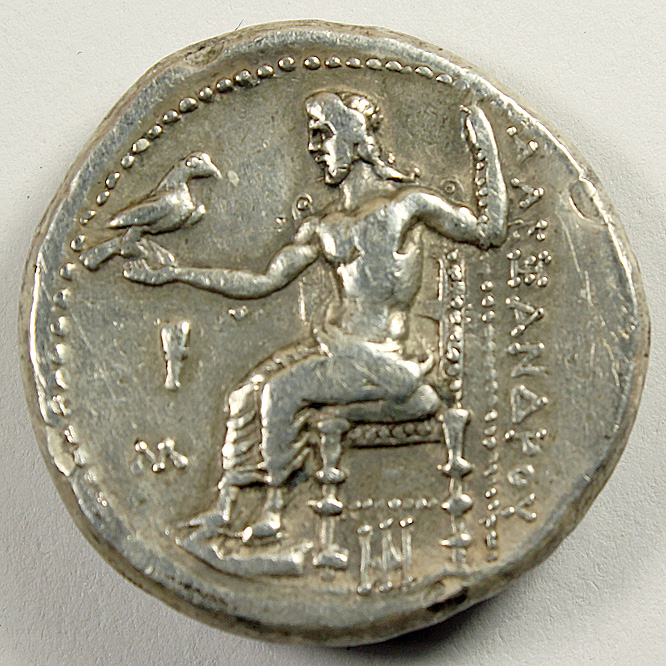
In 332 BC Alexander the Great conquered Palestine. During his advance on Jerusalem he was met by a delegation of Jews who showed him passages from the Book of Daniel which Alexander understood to foretell his defeat of the Persian Empire. Alexander expressed gratitude to the Jews, offered sacrifice at the Temple and spared Jerusalem. The passage that Alexander was shown is quite compelling, Daniel identifies Greece as a goat and Persia as a ram with two horns. The Persian Empire was formed from two kingdoms, the Medes and the Persians. Daniel goes on to describe the goat (Greece) as having a great horn that was broken when it was strong and replaced by four horns. Alexander died at the height of his power and was replaced by his four generals who divided his Empire into four parts.
This coin is 17mm in diameter and weighs 4.2g. It shows Alexander (dressed as Herakles) wearing a lion-skin heardress on the obverse and Zeus seated on a throne on the reverse.
 |
MACEDONIA
ALEXANDER THE GREAT SILVER TETRADRACHM |
 |
| 336-323 BC | VF | PRICE-3640 |
DANIEL 8:5-8 "And as I was considering, behold, an he goat came from the west on the face of the whole earth, and touched not the ground: and the goat had a notable horn between his eyes. And he came to the ram that had two horns, which I had seen standing before the river, and ran unto him in the fury of his power. And I saw him come close unto the ram, and he was moved with choler against him, and smote the ram, and brake his two horns: and there was no power in the ram to stand before him, but he cast him down to the ground, and stamped upon him: and there was none that could deliver the ram out of his hand. Therefore the he goat waxed very great: and when he was strong, the great horn was broken; and for it came up four notable ones toward the four winds of heaven."
 |
EGYPT PTOLEMY II SILVER TETRADRACHM |
 |
| BC | F | SEAR- |
 |
SELEUCID EMPIRE
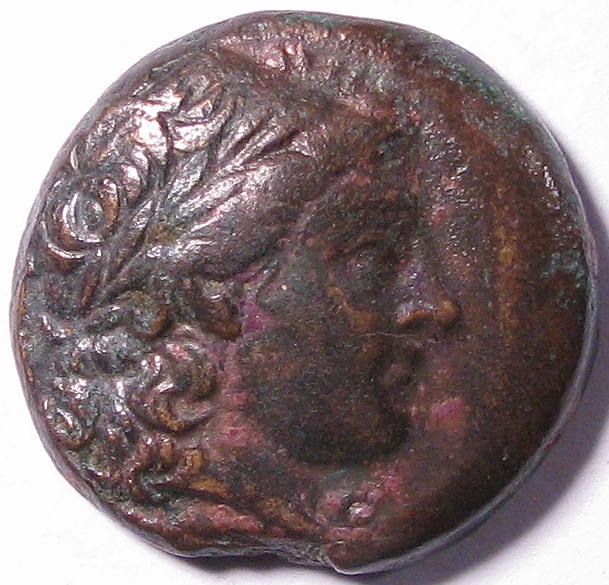
SELEUCUS I 312-280 BC 20mm BRONZE |
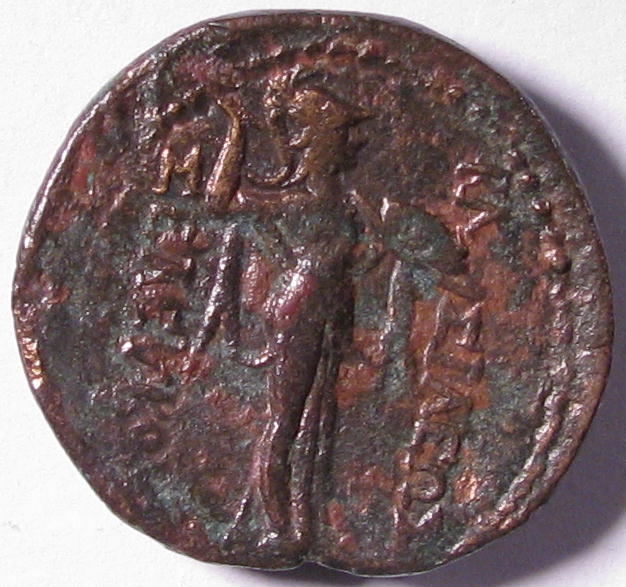 |
| 312-280 BC | VF | SEAR-2849 |
Seleucus I was a general under Alexander the Great, after Alexander's death he established the Seleucid Empire, which included Israel.
This coin is 20mm in diameter and weighs 7.3g. It was minted at Antioch.
 |
SELEUCID EMPIRE
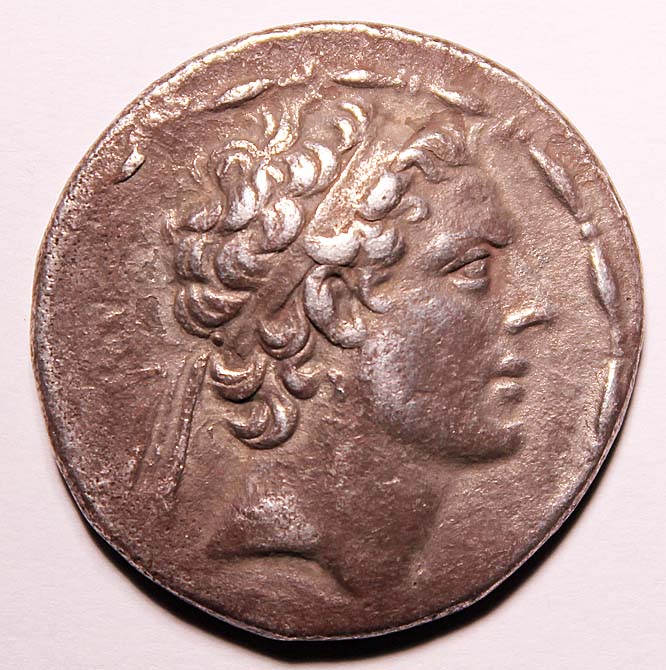
ANTIOCHUS IV SILVER TETRADRACHM |
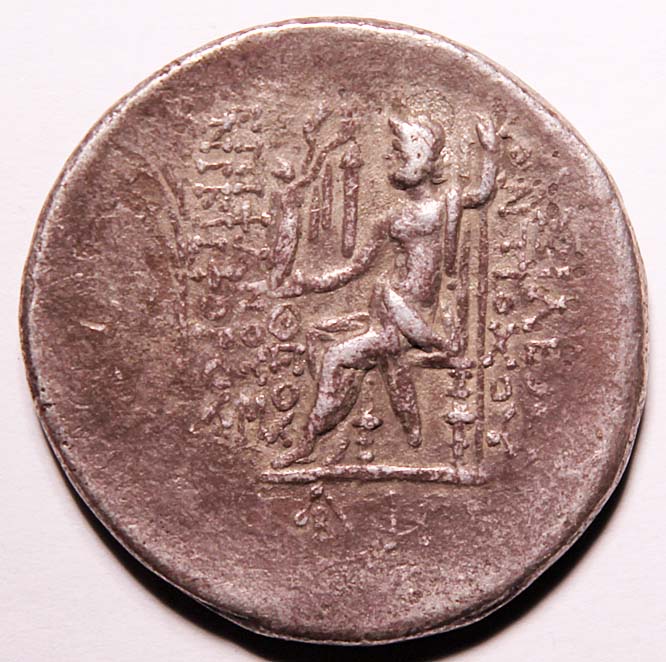 |
| BC | VF | SEAR- |
 |
SELEUCID EMPIRE
ANTIOCHUS IV AE 35 |
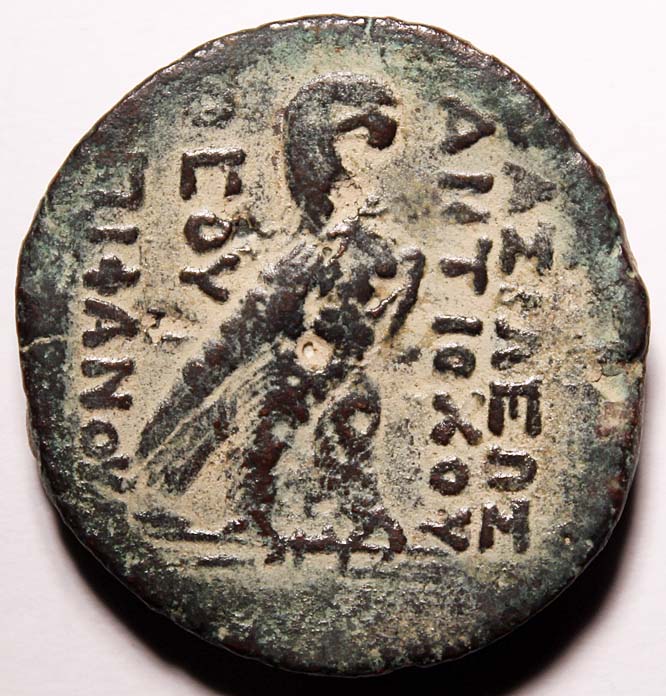 |
| BC | VF | SEAR- |
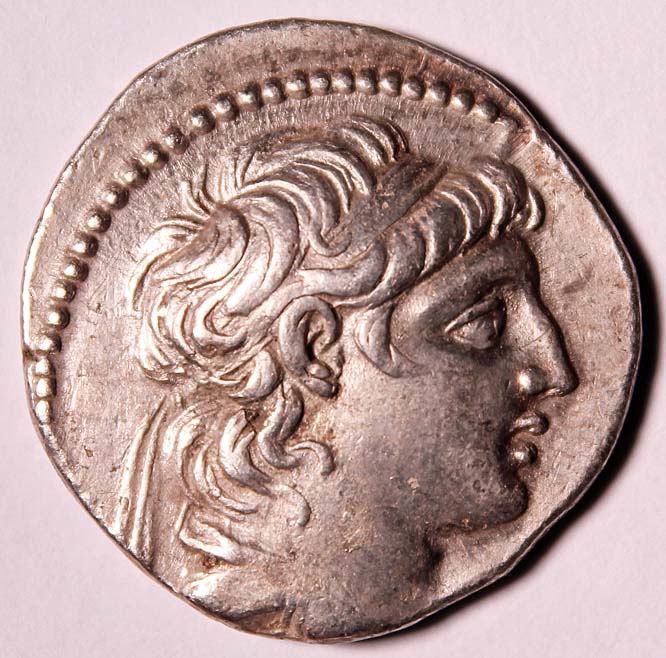 |
SELEUCID EMPIRE
ANTIOCHUS VII SILVER TETRADRACHM |
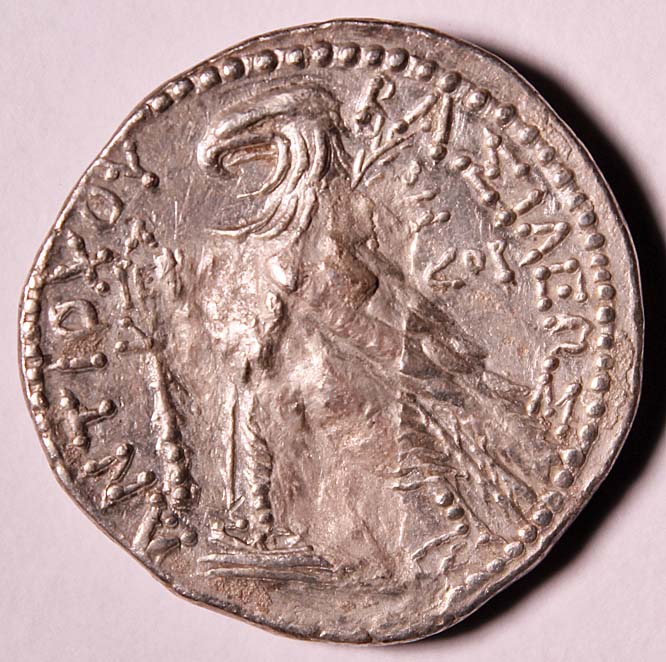 |
| BC | EF | SEAR- |
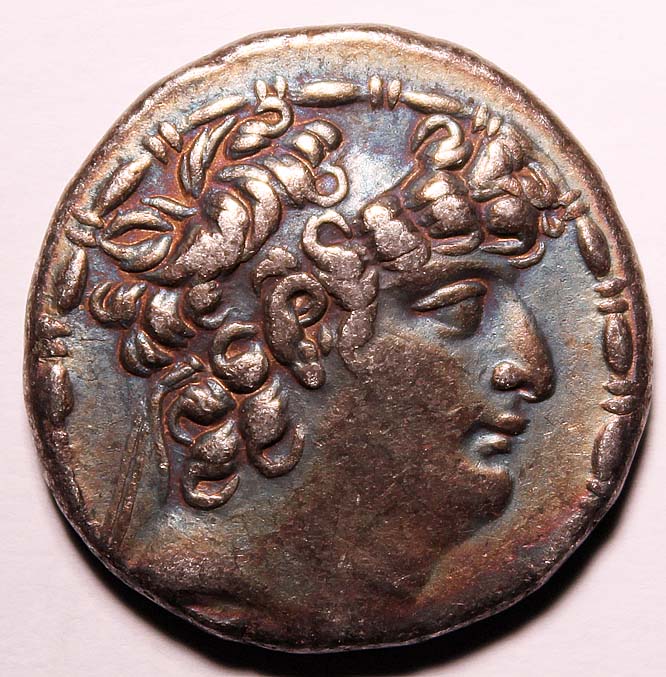 |
SELEUCID EMPIRE
PHILIP PHILADELPHOS SILVER TETRADRACHM |
 |
| BC | EF | SEAR- |
 |
EGYPT
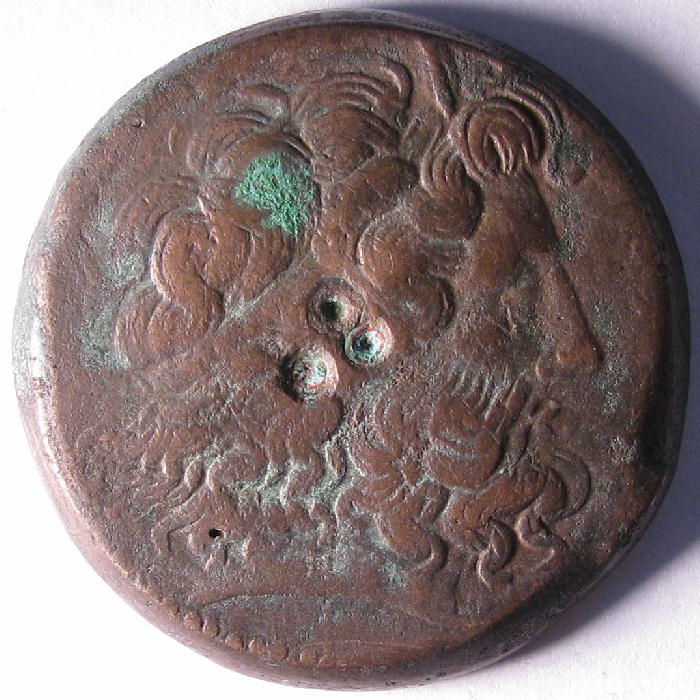
PTOLEMY III 38mm BRONZE |
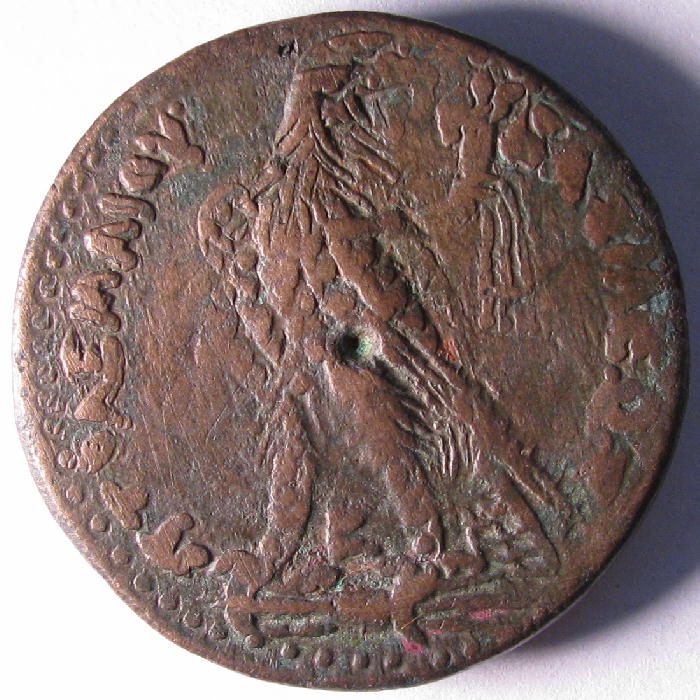 |
| 246-221 BC | VF | SEAR-7815 |
Ptolemy III Euergetes, who ruled Egypt from 246-221 BC, was the king who ordered that the Hebrew Old Testament be translated into Greek. This Greek translation of the Hebrew Scriptures is known as the Septuagint. During this period Alexandria, Egypt had a large Jewish population and Ptolemy selected seventy-two Jewish scholars to complete the task.
This coin is 38mm in diameter and weighs 40g. This large bronze coin shows a bust of Zeus on the obverse and an eagle standing on a thunderbolt on the reverse. The small holes in the center of the obverse and reverse of this coin are common on Ptolemaic coins, appearing on about 50% of the bronze issues of this period. Although they are thought to be centering holes, their true purpose remains unclear.
COINS OF THE MACCABEE DYNASTY
 |
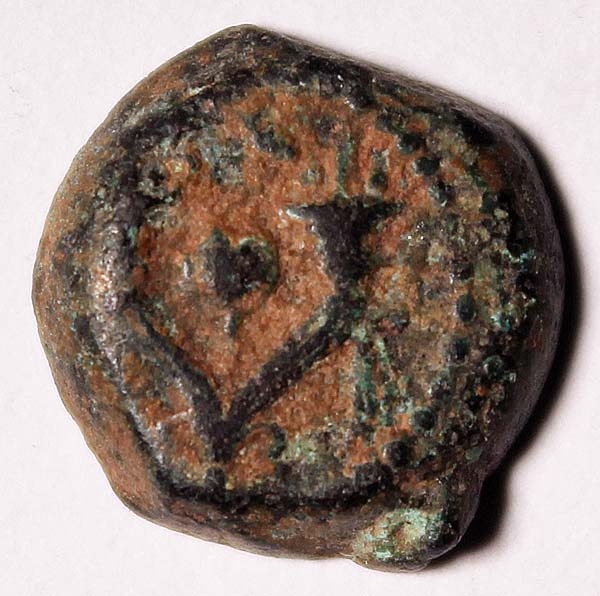
JUDAEA
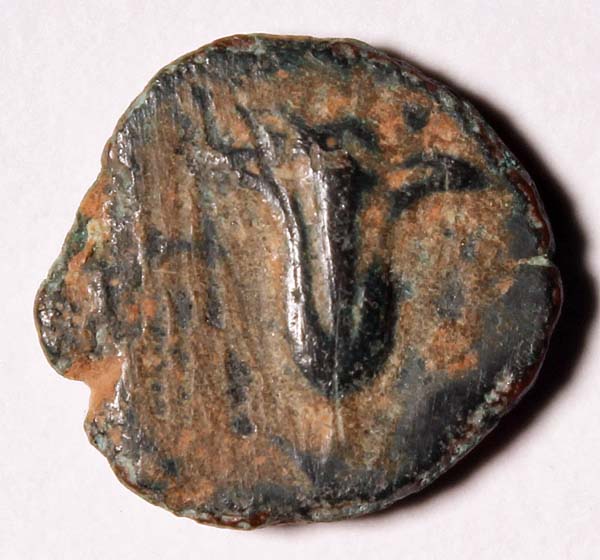
ANTIOCHUS VII & JOHN HYRCANUS I BRONZE PRUTAH |
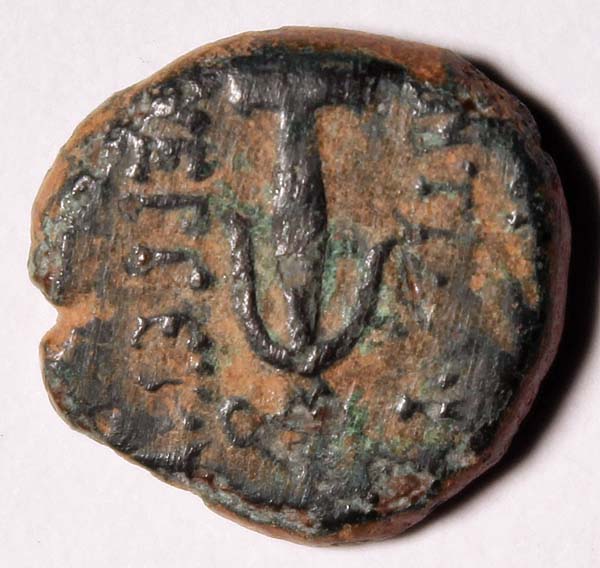 |
| 132-130 BC | F | HENDIN-1131 |
 |
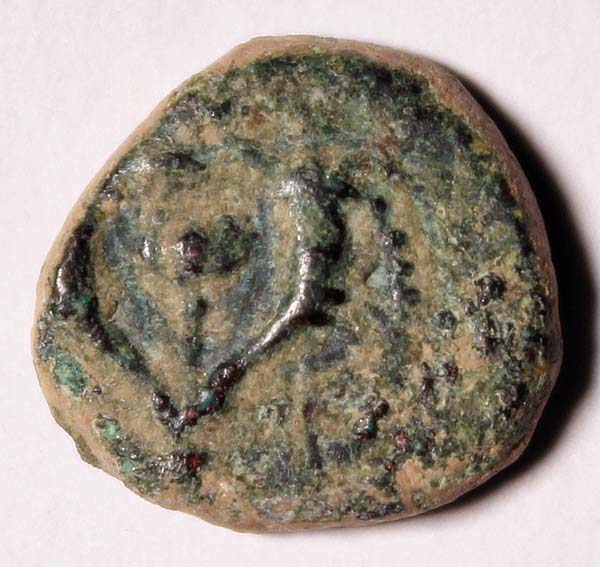
JUDAEA
JOHN HYRCANUS I BRONZE PRUTAH |
 |
| 135-103 BC | F | HENDIN- |
 |
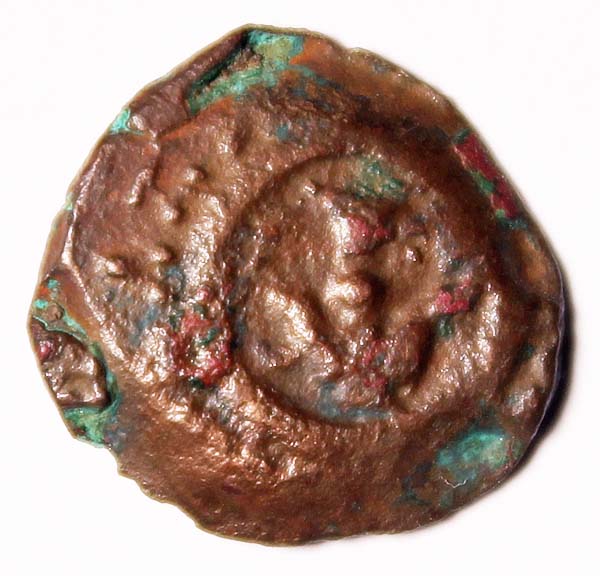
JUDAEA
JUDAH ASTROBULUS BRONZE PRUTAH |
 |
| 104-103 BC | VF | HENDIN-1142 |
 |
JUDAEA
ALEXANDER JANNAEUS BRONZE LEPTON |
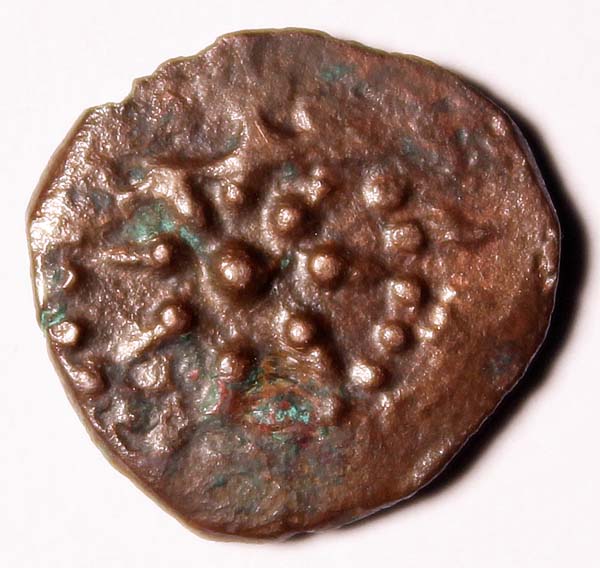 |
| 103-76 BC | VF | HENDIN-471 |
Bronze Prutah of Alexander Jannaeus. These small bronze coins were minted in large numbers from 103-76 BC and were the smallest denomination coin used in the Holy Land in the New Testament period. While production of these coins ceased in 76 BC, they continued in common use well into the Second Century.
These coins measures about 14mm in diameter and weighs 1g. The obverse shows an anchor and the reverse a star with eight rays.
LUKE 21: 1-3 "And he looked up, and saw the rich men casting their gifts into the treasury. And he saw also a certain poor widow casting in thither two mites. And he said, Of a truth I say unto you, that this poor widow hath cast in more than they all: For all these have of their abundance cast in unto the offerings of God: but she of her penury hath cast in all the living that she had."
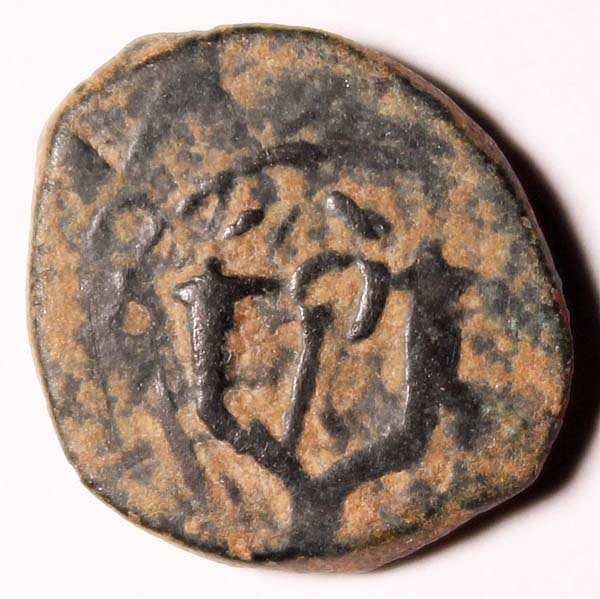 |
JUDAEA
JOHN HYRCANUS II & SALOME ALEXANDRA BRONZE PRUTAH |
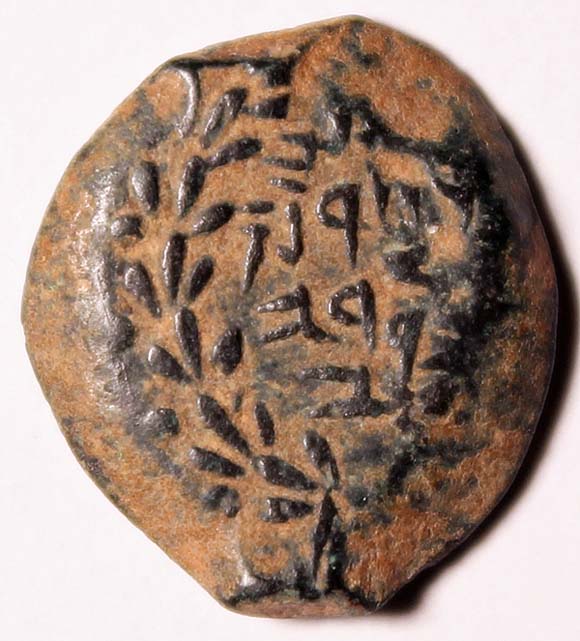 |
| 63-40 BC | VF | HENDIN-1159 |
 |
JUDAEA
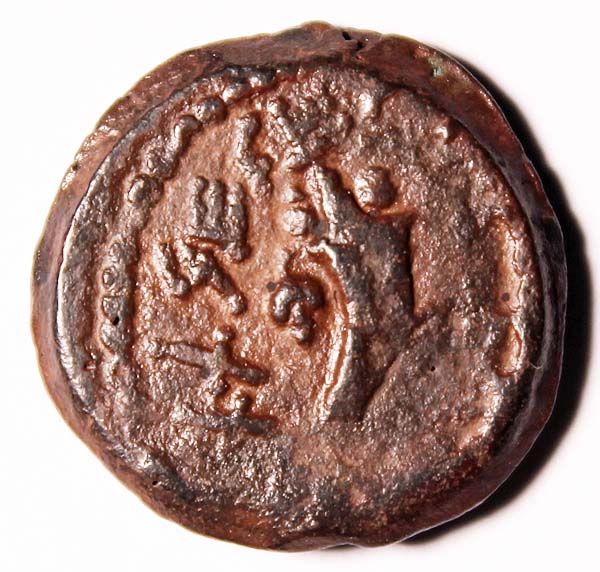
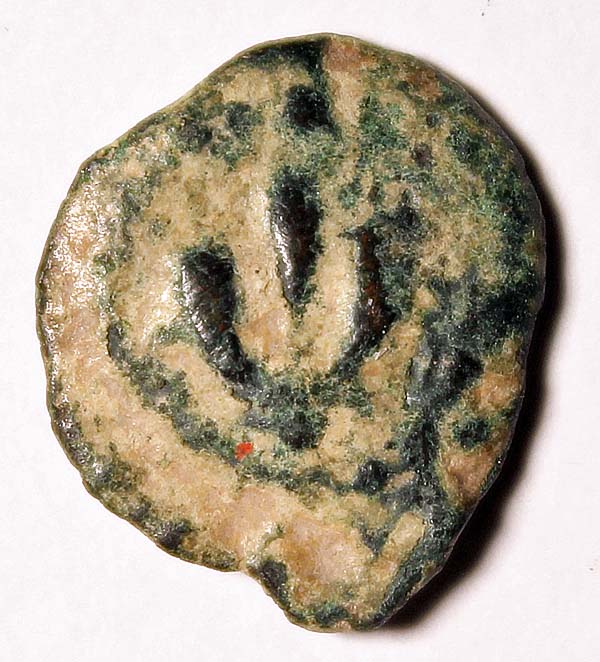
MATTATHIAS ANTIOGONUS BRONZE FOUR PRUTAH |
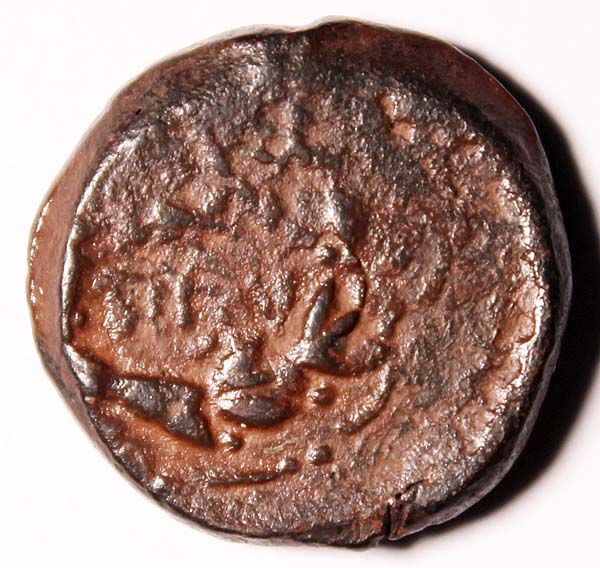 |
| 40-37 BC | VF | HENDIN-1163 |
 |
JUDAEA
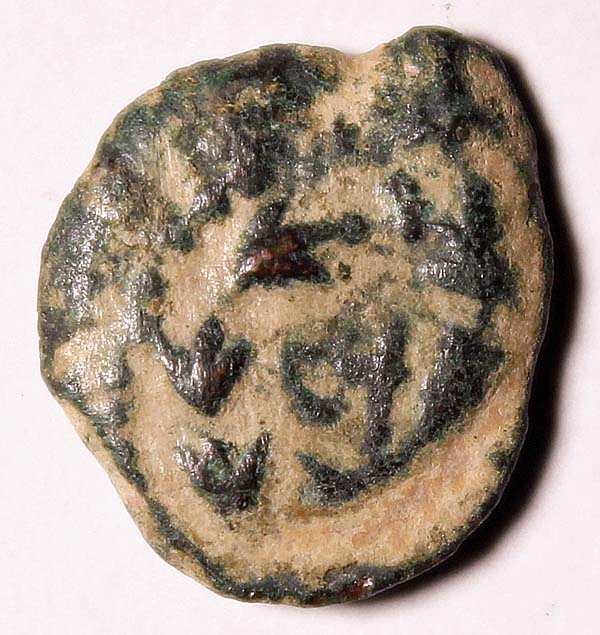
MATTATHIAS ANTIOGONUS BRONZE PRUTAH |
 |
|
40-37 BC |
F | HENDIN-1164 |
COINS OF THE HERODIAN DYNASTY:
 |
JUDAEA
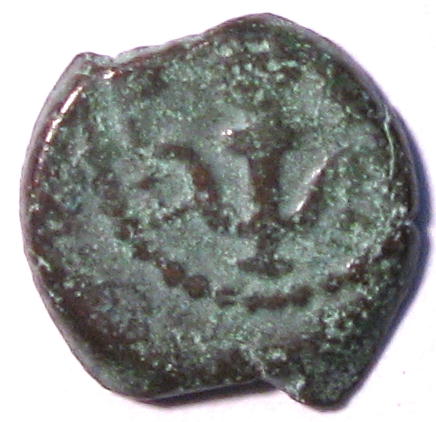
HEROD THE GREAT 40-4 BC BRONZE PRUTAH |
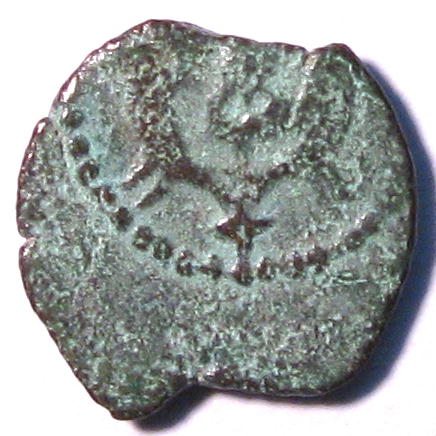 |
| 40-4 BC | F | HENDIN-500 |
Although a cruel tyrant of whom Augustus Caesar said "it is better to be Herod's pig than his son," Herod the Great undertook a building program that greatly improved the infrastructure of Judaea. However, Herod ruled with an iron fist, among the many thousands that he executed were his wife and two of his sons, prompting Augustus to make his comment. During the final years of Herod's reign, in c. 6-5 BC, Christ was born in Bethlehem.
This coin is 13mm in diameter and weighs 1.6g. The obverse shows a boat anchor and the reverse a double cornucopia.
MATTHEW 2:1 "Now when Jesus was born in Bethlehem of Judaea in the days of Herod the king, behold, there came wise men from the east to Jerusalem."
 |
JUDAEA
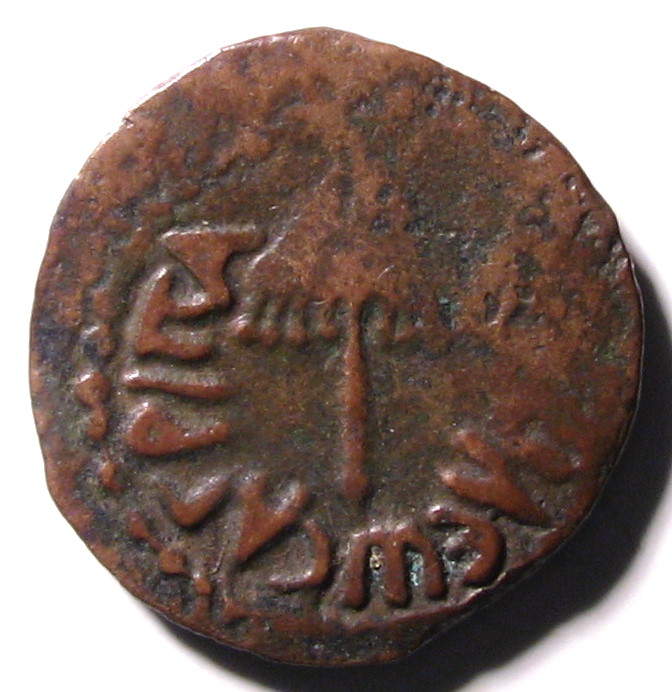
HEROD AGRIPPA I AD 37-44 BRONZE PRUTAH |
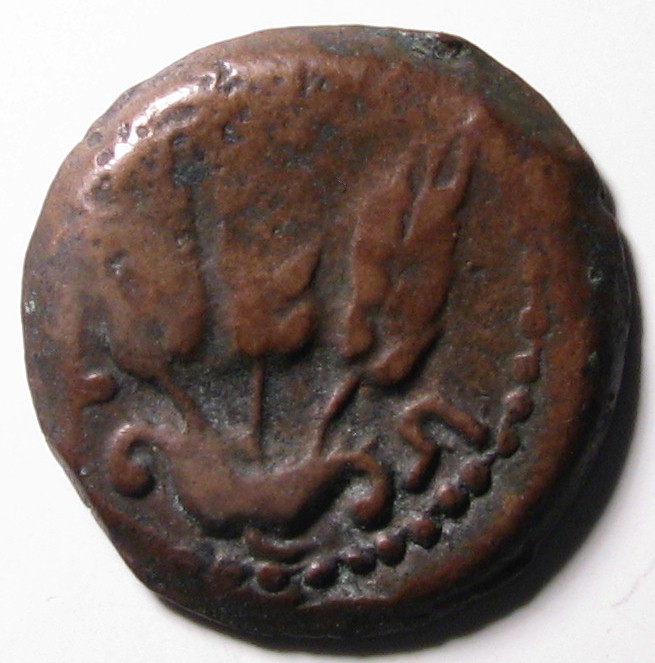 |
AD 41-42 |
F | HENDIN-553 |
Bronze Prutah of Herod Agrippa I. Herod Agrippa I ruled from AD 37-44 and has the distinction of being one of the first recorded persecutors of the Christians.
This coin measures 16mm in diameter and weighs 2.1g. The obverse shows a canopy and there are three ears of barley on the reverse.
ACTS 12: 1-2 "Now about that time Herod the king stretched forth his hands to vex certain of the church. And he killed James the brother of John with the sword."
 |
JUDAEA
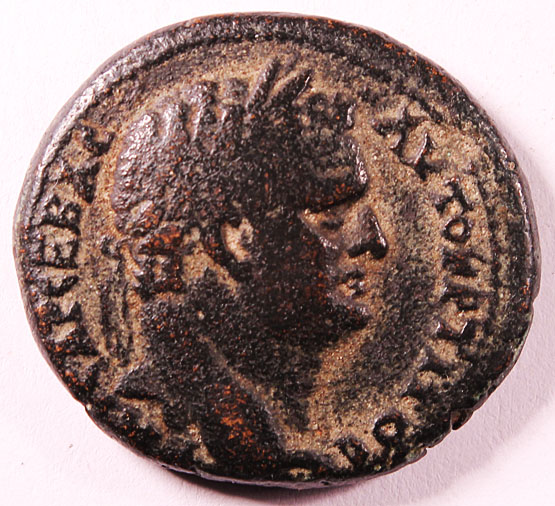
HEROD AGRIPPA II AD 55-95 26mm BRONZE |
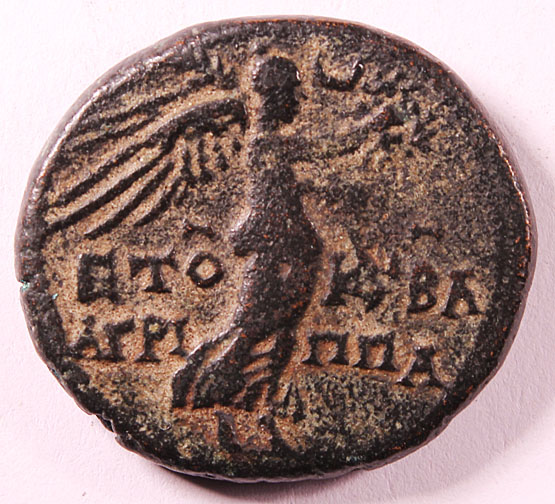 |
| AD 74-75 | F | HENDIN-1284b |
Mint of Caesarea Philippi
COINS OF THE PREFECTS AND PROCURATORS OF JUDAEA:
 |
JUDAEA
MARCUS AMBIBULUS AD 9-12 BRONZE PRUTAH |
 |
| AD 30 | VF | HENDIN-636 |
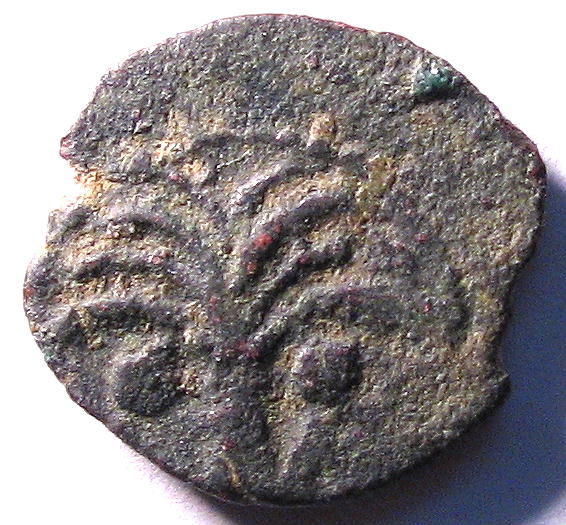
Very little is known of Marcus Ambibulus, he is mentioned by Flavius Josephus only briefly and is not mentioned in the Bible at all. We do know that Ambibulus was appointed Prefect of Judaea by Augustus and that he served from AD 9-12.
This coin measures 17mm in diameter and weighs 2.2g. It is dated year 39 of the reign of Augustus which was AD 9.
 |
JUDAEA
PONTIUS PILATE AD 26-36 BRONZE PRUTAH |
 |
|
AD 30 |
VF | HENDIN-649 |
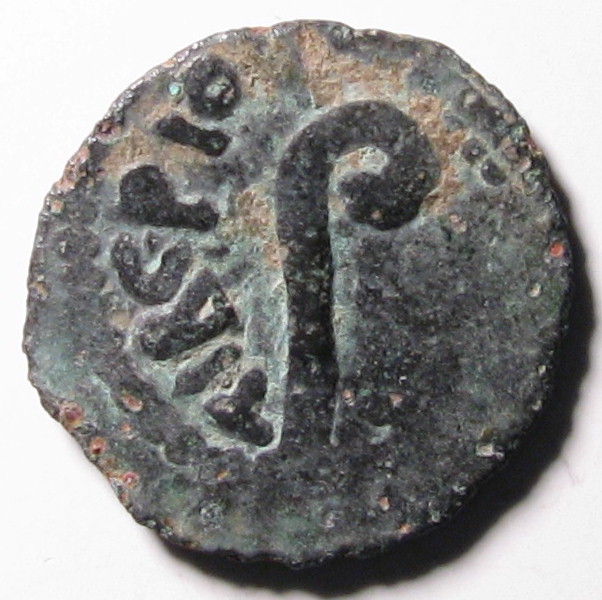
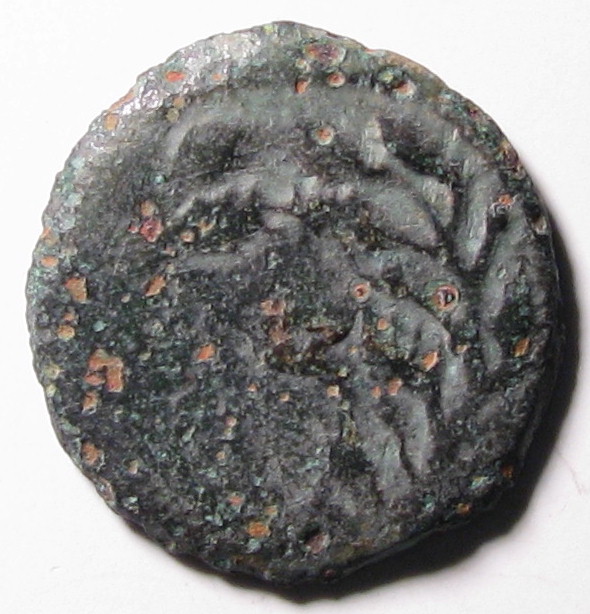
Pilate was the Roman Prefect of Judaea during the Ministry of Christ and it was Pilate before whom Christ stood trial and was sentenced to die on the cross. Pilate is portrayed in the Gospels as being reluctant to sentence Christ to death, however because of his precarious political position he gave in to popular will. After Pilate was recalled by Tiberius Caesar in AD 36 he disappears from history, but tradition recounts how Pilate was banished to Gaul and eventually took his own life.
This coin measures 16mm in diameter and weighs 1.6g. It is dated "LIZ" which is the 17th year of the reign of Tiberius and corresponds to AD 30, which was the year Christ was crucified.
JOHN 18:37-38 "Pilate therefore said unto him, Art thou a king then? Jesus answered, Thou sayest that I am a king. To this end was I born, and for this cause came I into the world, that I should bear witness unto the truth. Every one that is of the truth heareth my voice.Pilate saith unto him, What is truth? And when he had said this, he went out again unto the Jews, and saith unto them, I find in him no fault at all."
 |
JUDAEA
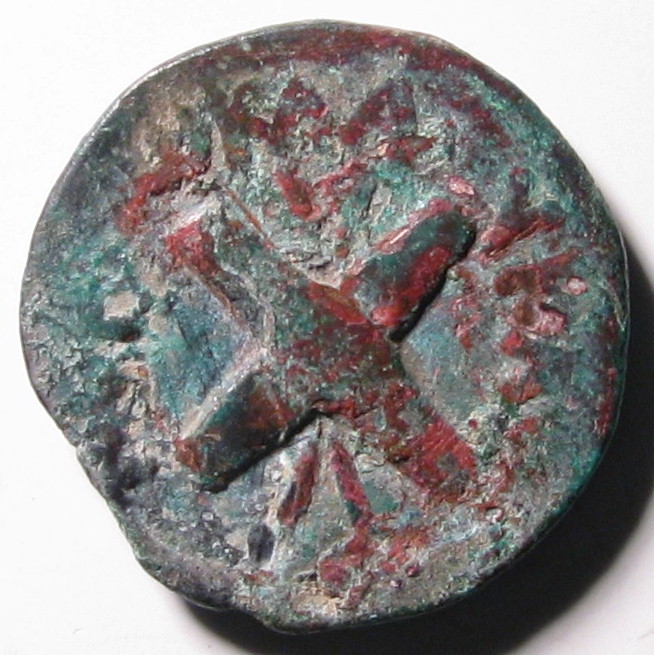
ANTONIUS FELIX AD 52-59 BRONZE PRUTAH |
 |
|
AD 54 |
VF | HENDIN-652 |
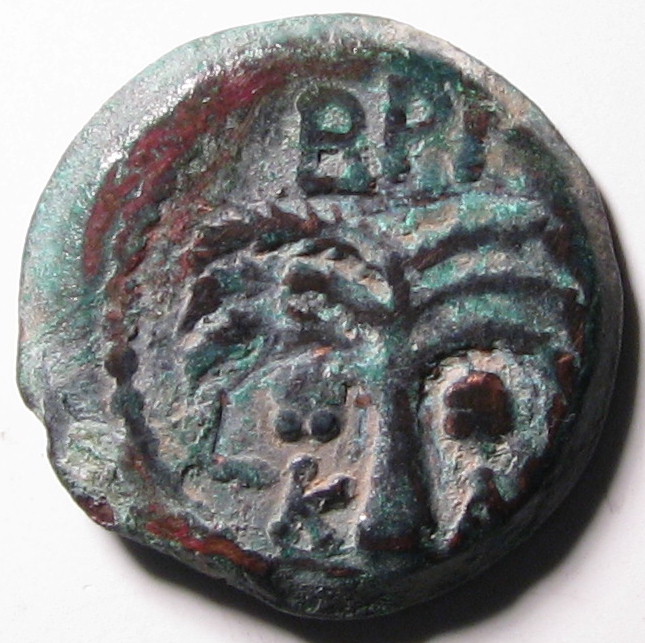
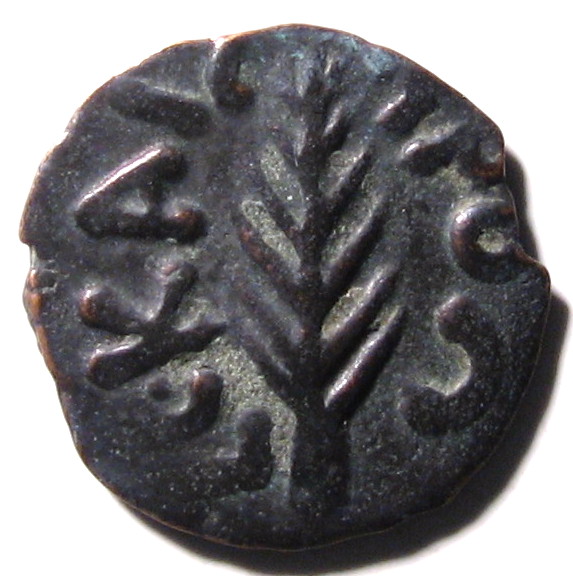
Antonius Felix was appointed Procurator of Judaea by Claudius Caesar in AD 52. Felix is remembered as a corrupt and cruel official. The Apostle Paul stood trial before Felix and was imprisoned for two years. When Felix was recalled by Nero in AD 58 he was accused of official corruption, but was pardoned by the Emperor. One interesting footnote to the life of Felix is that his son Marcus Antonius Agrippa was killed in the eruption of Mount Vesuvius in AD 79 along with Felix's wife Drusilla.
This coin measures 17mm in diameter and weighs 3.2g. It is dated year 14 of the reign of Claudius which was AD 54.
ACTS 24:24-27 "And after certain days, when Felix came with his wife Drusilla, which was a Jewess, he sent for Paul, and heard him concerning the faith in Christ. And as he reasoned of righteousness, temperance, and judgment to come, Felix trembled, and answered, Go thy way for this time; when I have a convenient season, I will call for thee. He hoped also that money should have been given him of Paul, that he might loose him: wherefore he sent for him the oftener, and communed with him. But after two years Porcius Festus came into Felix' room: and Felix, willing to shew the Jews a pleasure, left Paul bound."
 |
JUDAEA
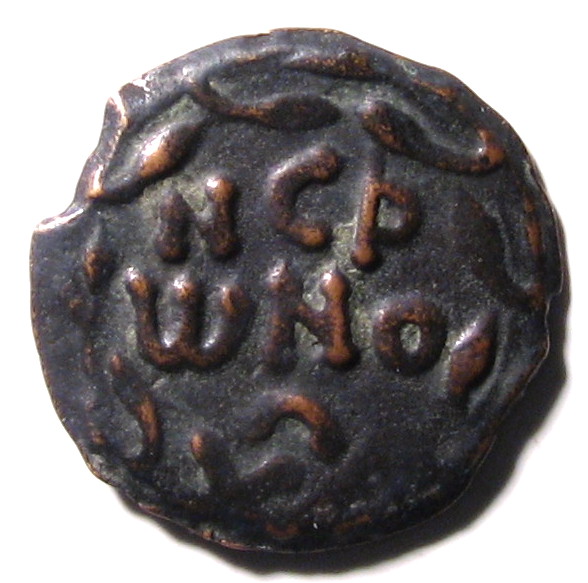
PORCIUS FESTUS AD 58-62 BRONZE PRUTAH |
 |
|
AD 58-59 |
VF | HENDIN-653 |
Porcius Festus was appointed Procurator of Judaea in AD 58 by the Emperor Nero, and inherited many of the problems left by Felix. Among these problems was the Apostle Paul, who had been imprisoned by Felix two years earlier.
This coin measures 15mm in diameter and weighs 1.3g. It is dated year 5 of the reign of Nero which was AD 58-59.
ACTS 25:12 "Then Festus, when he had conferred with the council, answered, Hast thou appealed unto Caesar? unto Caesar shalt thou go."
COINS ILLUSTRATING BIBLICAL STORIES:
 |
JUDAEA
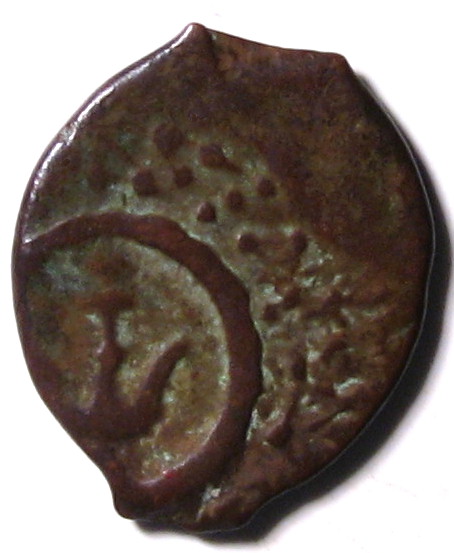
ALEXANDER JANNAEUS BRONZE PRUTAH |
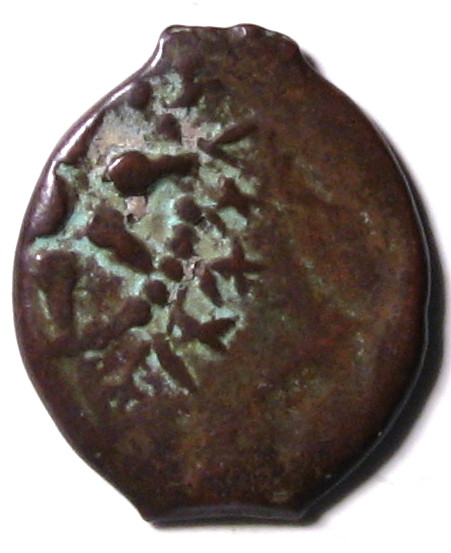 |
| 103-76 BC | F | HENDIN-469 |
"The Widow's Mite"
This coin measures about 14mm in diameter and weighs 1g. The obverse shows an anchor and the reverse a star with eight rays.
LUKE 21:1-3 "And he looked up, and saw the rich men casting their gifts into the treasury. And he saw also a certain poor widow casting in thither two mites. And he said, Of a truth I say unto you, that this poor widow hath cast in more than they all."
 |
ROMAN EMPIRE
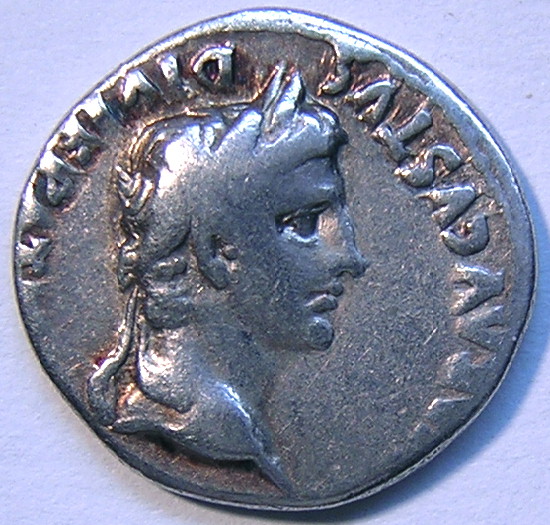
AUGUSTUS CAESAR 27 BC-AD 14 SILVER DENARIUS |
 |
| 2 BC-AD 4 | VF | SEAR-1597 |
"The Laborer's Penny"
This coin measures 19mm in diameter and weighs 3.8g. It shows a bust of Augustus on the obverse and Caius and Lucius Caesars on the reverse.
MATTHEW 20:1-16 "For the kingdom of heaven is like unto a man that is an householder, which went out early in the morning to hire labourers into his vineyard. And when he had agreed with the labourers for a penny a day, he sent them into his vineyard. And he went out about the third hour, and saw others standing idle in the marketplace, And said unto them; Go ye also into the vineyard, and whatsoever is right I will give you. And they went their way. Again he went out about the sixth and ninth hour, and did likewise. And about the eleventh hour he went out, and found others standing idle, and saith unto them, Why stand ye here all the day idle? They say unto him, Because no man hath hired us. He saith unto them, Go ye also into the vineyard; and whatsoever is right, that shall ye receive. So when even was come, the lord of the vineyard saith unto his steward, Call the labourers, and give them their hire, beginning from the last unto the first. And when they came that were hired about the eleventh hour, they received every man a penny. But when the first came, they supposed that they should have received more; and they likewise received every man a penny. And when they had received it, they murmured against the goodman of the house, Saying, These last have wrought but one hour, and thou hast made them equal unto us, which have borne the burden and heat of the day. But he answered one of them, and said, Friend, I do thee no wrong: didst not thou agree with me for a penny? Take that thine is, and go thy way: I will give unto this last, even as unto thee. Is it not lawful for me to do what I will with mine own? Is thine eye evil, because I am good? So the last shall be first, and the first last: for many be called, but few chosen."
 |
ANTIOCH, SYRIA
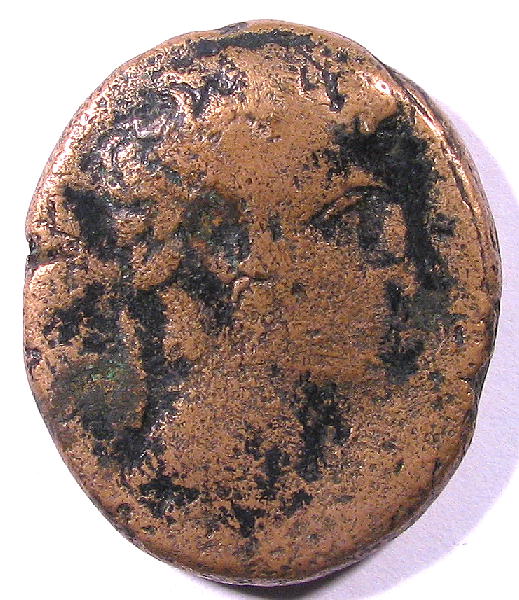
AUGUSTUS CAESAR 27 BC-AD 14 AE 28 |
 |
| 27 BC-AD 14 | F | SEAR-108 |
"The Farthing"
This coin measures 24-28mm in diameter and weighs 16.6g. It shows a bust of Augustus Caesar on the obverse and a large "SC" within a wreath on the reverse. In the Authorized Version of the Bible two different Greek words are translated as "Farthing," in both of the cases below the word rendered "Farthing" is the Greek "Assarion." It is believed that the Assarion was the bronze coinage of Antioch which was quite common in Palestine in the First Century. One of these coins had the same buying power as the Roman As.
MATTHEW 10:29 "Are not two sparrows sold for a farthing? and one of them shall not fall on the ground without your Father."
LUKE 12:6 "Are not five sparrows sold for two farthings, and not one of them is forgotten before God?"
 |
ANCIENT GREECE
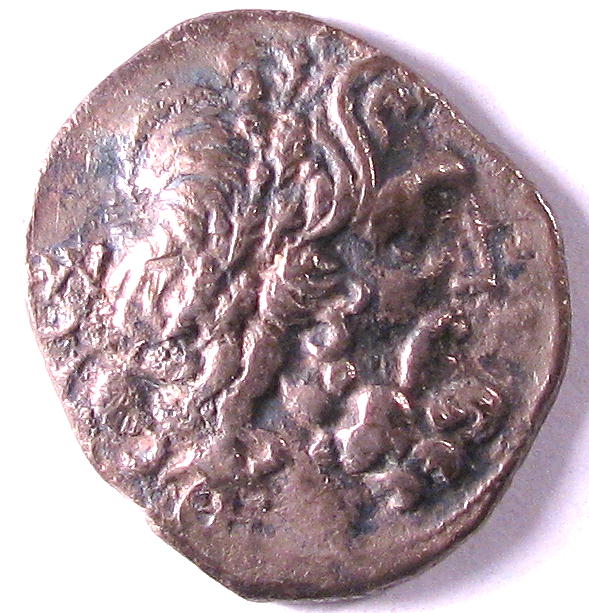
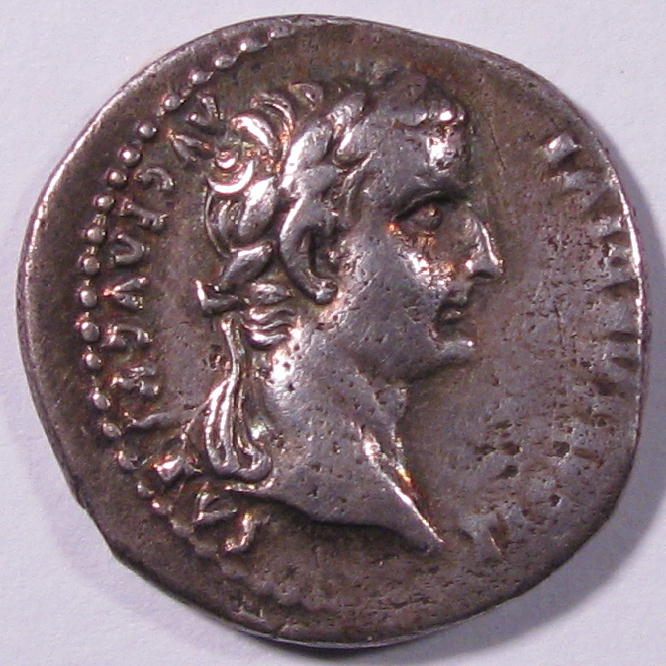
EPEIROTE REPUBLIC 238-168 BC SILVER DRACHM |
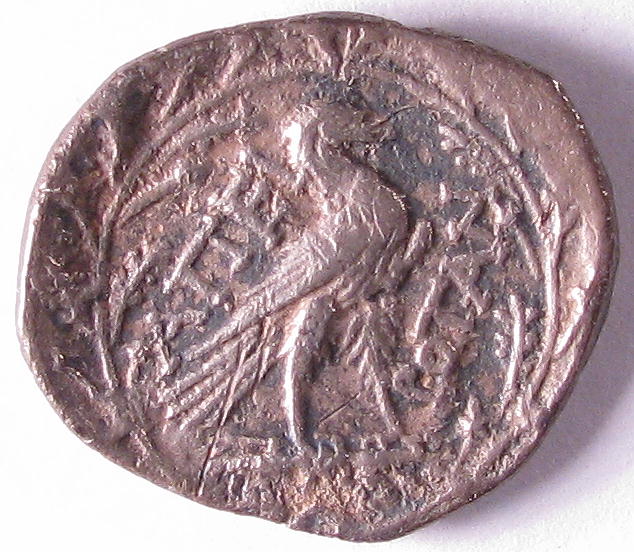 |
| 238-168 BC | VF | SEAR-1996 |
"The Lost Coin"
This coin measures 22mm in diameter and weighs 4.7g. It shows Zeus on the obverse and an eagle on the reverse.
LUKE 15:8-10 "Either what woman having ten pieces of silver, if she lose one piece, doth not light a candle, and sweep the house, and seek diligently till she find it? And when she hath found it, she calleth her friends and her neighbours together, saying, Rejoice with me; for I have found the piece which I had lost. Likewise, I say unto you, there is joy in the presence of the angels of God over one sinner that repenteth."
The full meaning of this parable is not immediately evident to the modern reader. To fully grasp the significance of the ten silver coins to the woman we must understand the customs of the times. In the ancient Near East when a woman married she would often be given ten silver Greek Drachmas as a sign of wealth and prosperity. If she were to do something that brought dishonor to her or her family one or more of the coins could be taken away.
 |
ROMAN EMPIRE
TIBERIUS CAESAR AD 14-37 SILVER DENARIUS |
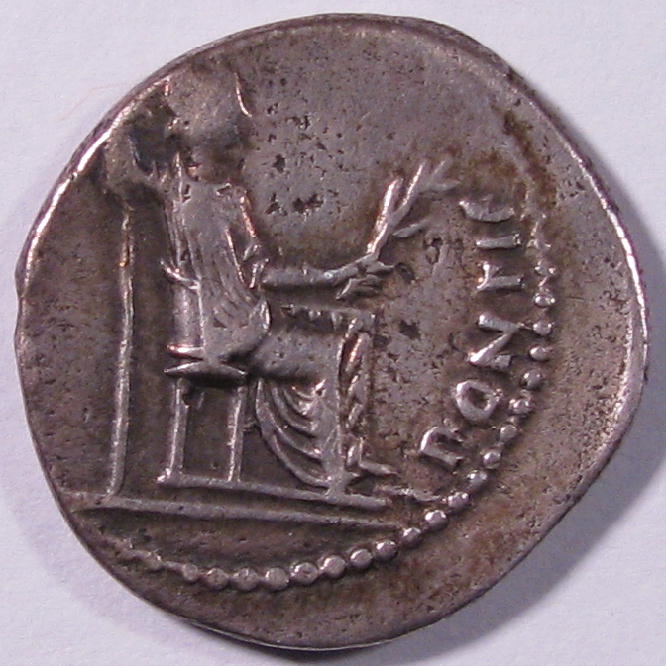 |
| after AD 16 | VF | SEAR-1763 |
"The Tribute Penny"
This coin measures 19mm in diameter and weighs 3.8g. It shows a bust of Tiberius on the obverse and Livia seated on the reverse.
MATTHEW 22:17-21 "Tell us therefore, What thinkest thou? Is it lawful to give tribute unto Caesar, or not? But Jesus perceived their wickedness, and said, Why tempt ye me, ye hypocrites? Shew me the tribute money. And they brought unto him a penny. And he saith unto them, Whose is this image and superscription? They say unto him, Caesar's. Then saith he unto them, Render therefore unto Caesar the things which are Caesar's; and unto God the things that are God's."
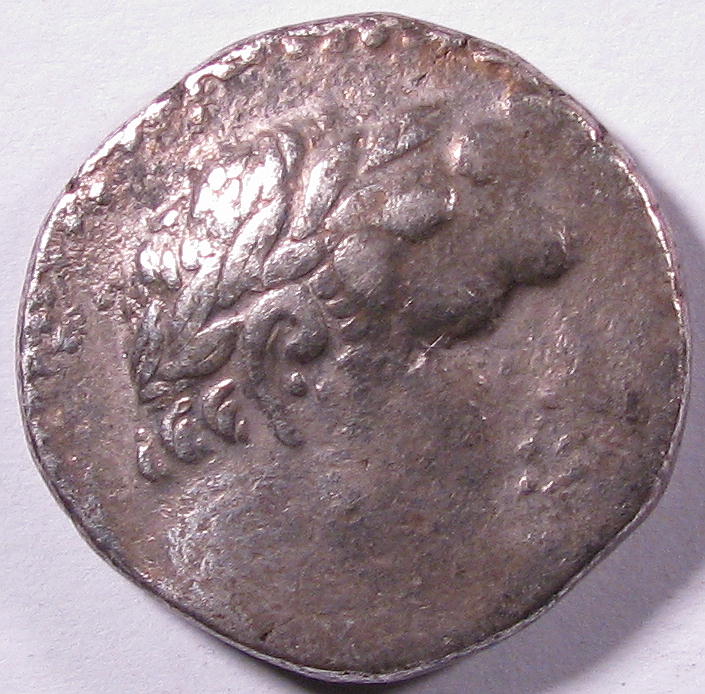 |
TYRE LOCAL ISSUE OF THE JERUSALEM MINT SILVER SHEKEL |
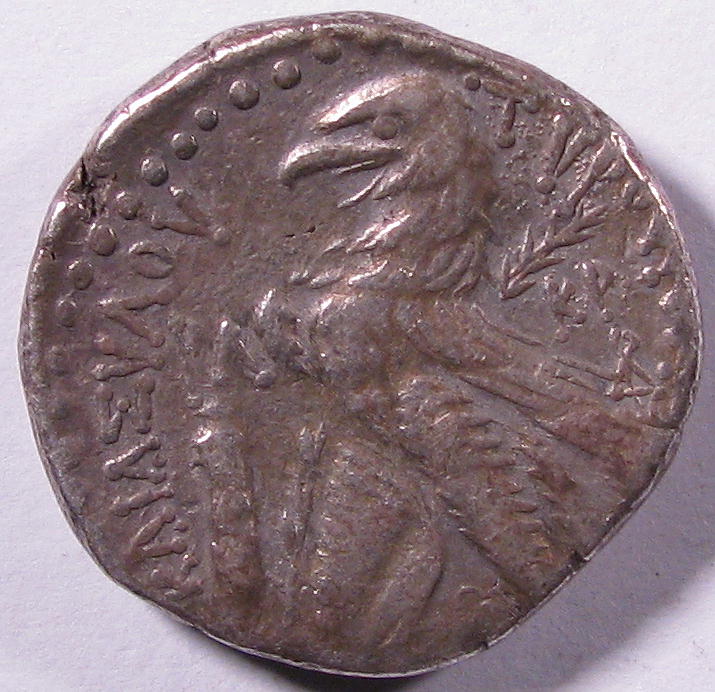 |
| AD 4-5 | aVF | HENDIN 919 |
"The Thirty Pieces of Silver"
This coin measures 24mm in diameter and weighs 13.8g. It shows a bust of the Phoenician god Melkart on the obverse and an eagle on the reverse. This coin type was both the type used to pay Judas and the type found by Peter in the fish's mouth.
MATTHEW 26:15-16 "And said unto them, What will ye give me, and I will deliver him unto you? And they covenanted with him for thirty pieces of silver. And from that time he sought opportunity to betray him."
"The Coin in the Fish's Mouth"
MATTHEW 17:24-27 "And when they were come to Capernaum, they that
received tribute money came to Peter, and said, Doth not your master pay
tribute? He saith, Yes. And when he was come into the house, Jesus
prevented him, saying, What thinkest thou, Simon? of whom do the kings of
the earth take custom or tribute? of their own children, or of strangers?
Peter saith unto him, Of strangers. Jesus saith unto him, Then are the
children free. Notwithstanding, lest we should offend them, go thou to
the sea, and cast an hook, and take up the fish that first cometh up; and
when thou hast opened his mouth, thou shalt find a piece of money: that
take, and give unto them for me and thee."
 |
JUDAEA
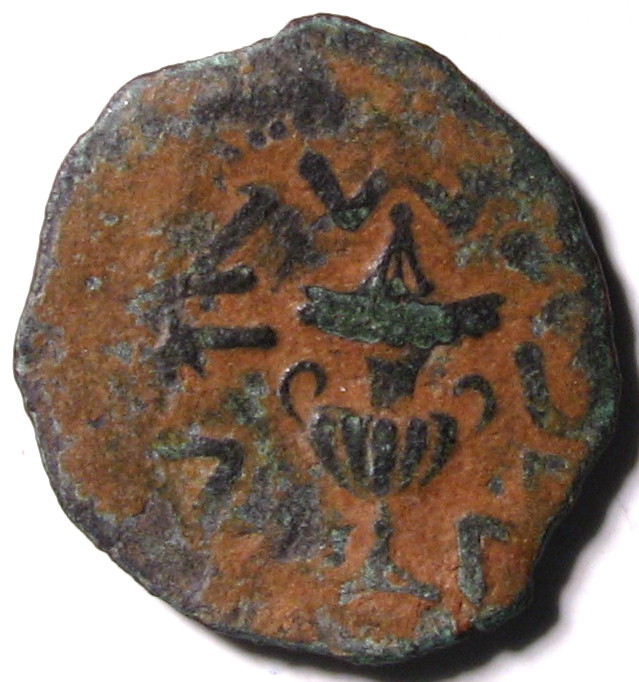
FIRST REVOLT AGAINST ROME BRONZE PRUTAH |
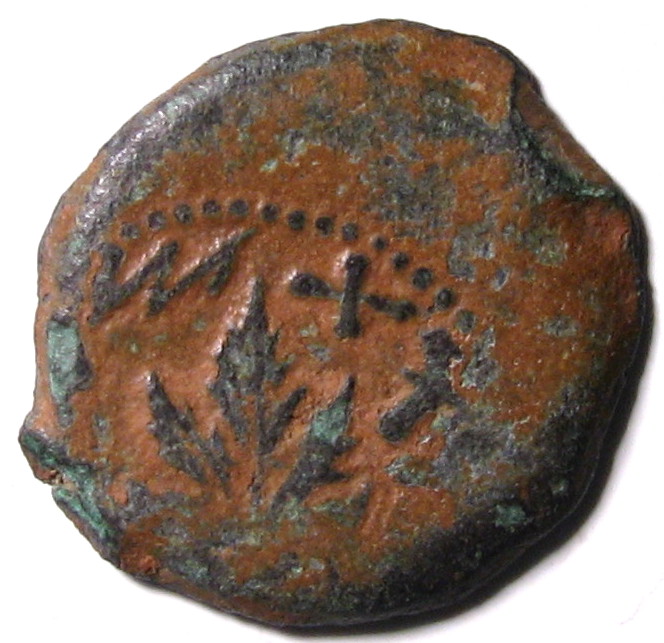 |
| AD 66-70 | F | HENDIN-664 |
Bronze Prutah minted during the first revolt against Rome. In AD 66 several Jewish factions united in rebellion against Roman rule. The Roman General Vespasian was sent to crush the rebellion, but he was proclaimed Emperor by his troops in AD 69 and departed for Rome to secure his position. Vespasian's son Titus was left in charge of the war and in AD 70, having laid siege to Jerusalem, he defeated the Jews and destroyed the Temple.
This coin measures 18mm in diameter and weighs 2.5g. The obverse shows a amphora and the reverse a vine leaf.
LUKE 19: 43-44 "For the days shall come upon thee, that thine enemies shall cast a trench about thee, and compass thee round, and keep thee in on every side, And shall lay thee even with the ground, and thy children within thee; and they shall not leave in thee one stone upon another."
 |
ROMAN EMPIRE
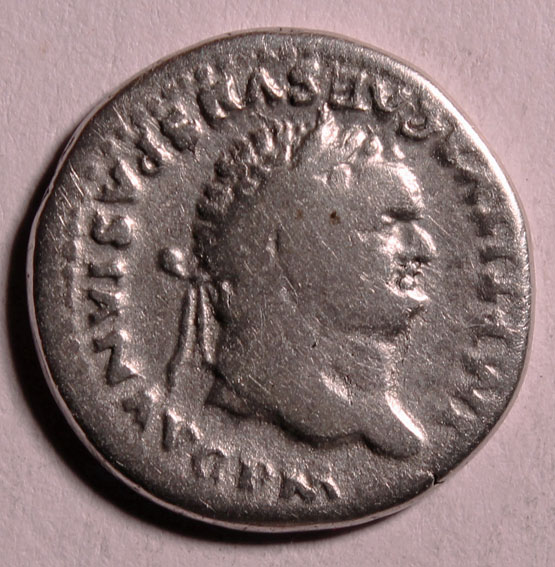
TITUS AD 79-81 SILVER DENARIUS |
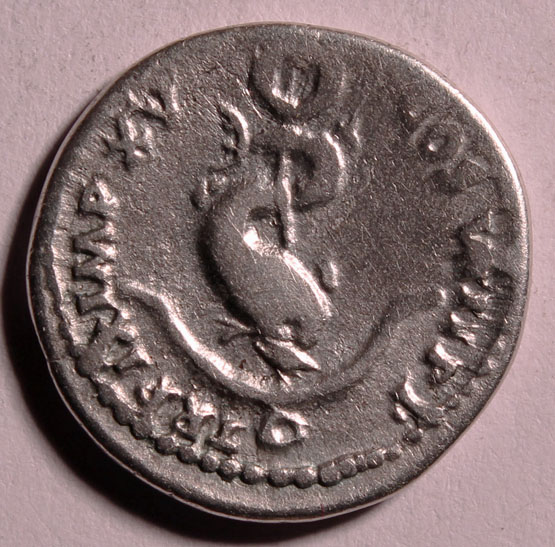 |
| AD 80 | F | SEAR-2517 |
COINS MINTED AT BIBLICAL LOCATIONS:
 |
ALEXANDRIA, EGYPT
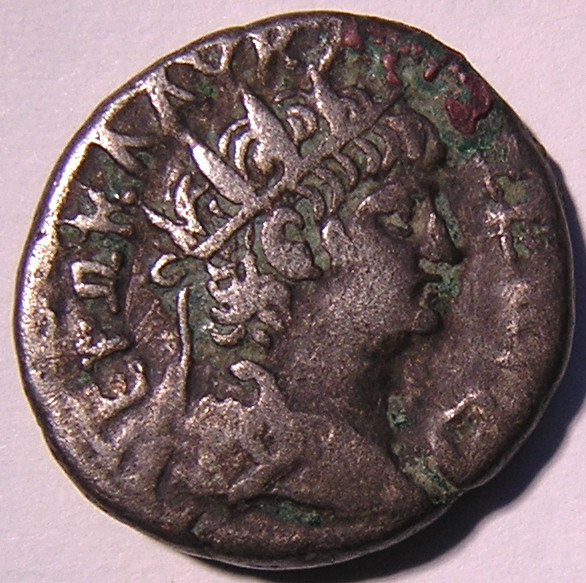
NERO AD 54-68 SILVER TETRADRACHM |
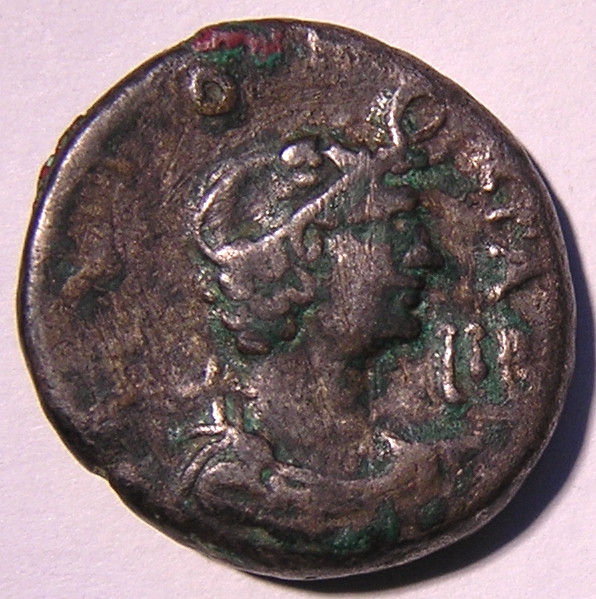 |
| AD 65-66 | VF | SEAR-2004 |
This coin measures 25mm in diameter and weighs 13g. It shows a bust of Nero on the obverse and Alexandria on the reverse.
ACTS 18:24 "And a certain Jew named Apollos, born at Alexandria, an eloquent man, and mighty in the scriptures, came to Ephesus."
 |
ANTIOCH, SYRIA
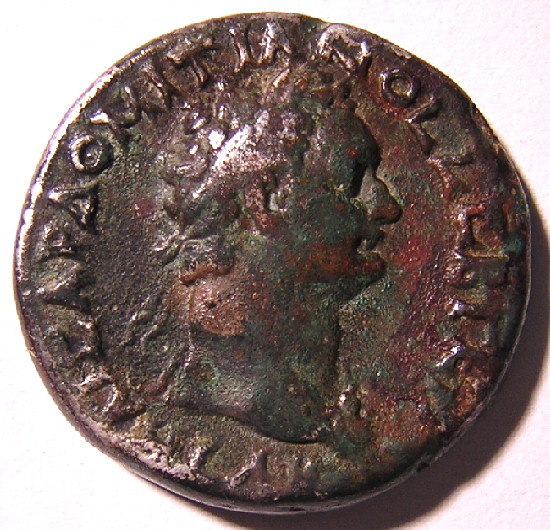
DOMITIAN AD 81-96 SILVER TETRADRACHM |
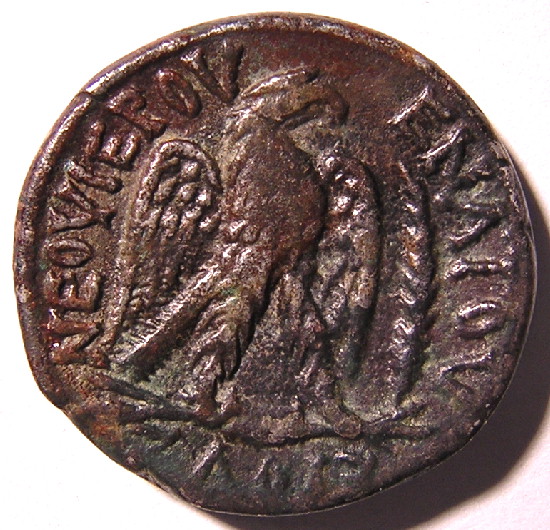 |
| AD 89-90 | VF | SEAR-871 |
This coin measures 25mm in diameter and weighs 14.1g. It shows a bust of Domitian on the obverse and an eagle on the reverse.
ACTS 11:26 "And when he had found him, he brought him unto Antioch. And it came to pass, that a whole year they assembled themselves with the church, and taught much people. And the disciples were called Christians first in Antioch."
 |
ATTICA
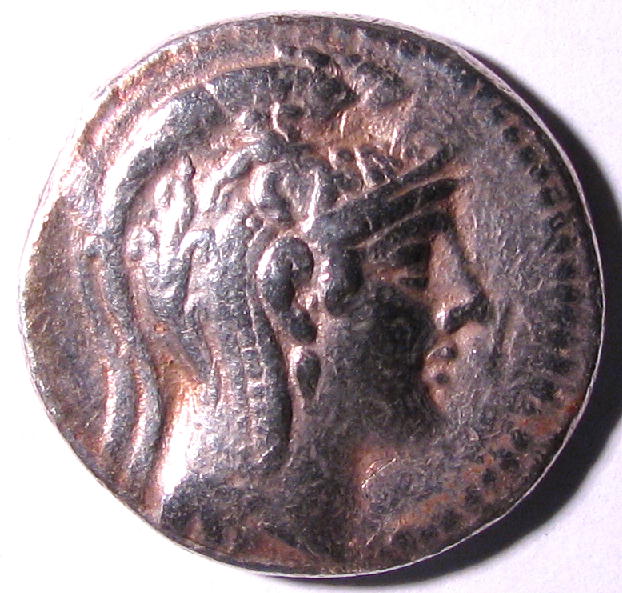
ATHENS SILVER TETRADRACHM |
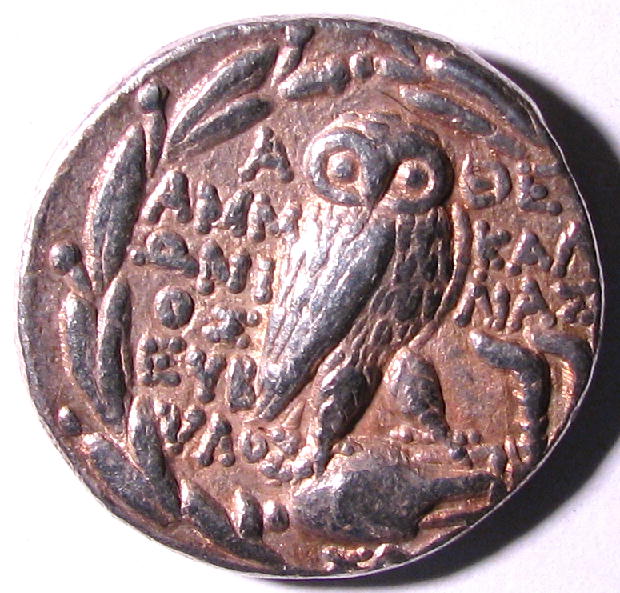 |
| 136-63 BC | VF | SEAR-2555v |
This coin measures 27mm in diameter and weighs 16.7g. It shows a bust of Athena on the obverse and an owl on the reverse.
ACTS 17:22-23 "Then Paul stood in the midst of Mars’ hill, and said, Ye men of Athens, I perceive that in all things ye are too superstitious. For as I passed by, and beheld your devotions, I found an altar with this inscription, TO THE UNKNOWN GOD. Whom therefore ye ignorantly worship, him declare I unto you."
 |
CAPPADOCIA
ARIDBARZANES I SILVER DRACHM |
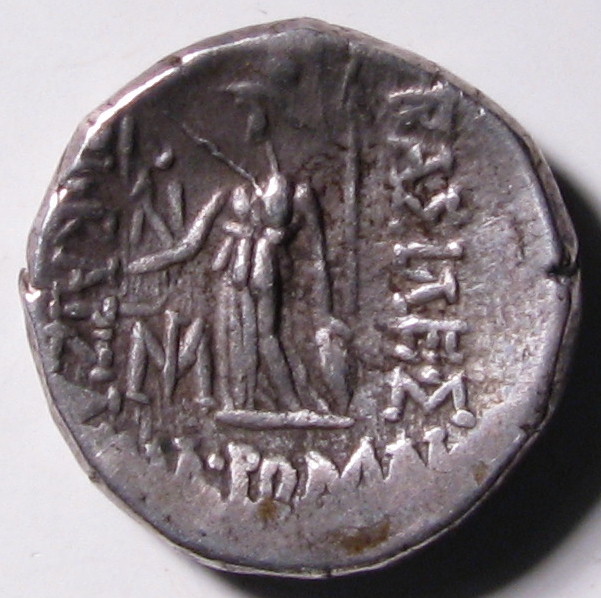 |
| 95-63 BC | VF | SEAR-7302 |
This coin measures 16mm in diameter and weighs 4.6g. It shows a bust of Aridbarzanes I on the obverse and Athena on the reverse.
I PETER 1:1-2 "Peter, an apostle of Jesus Christ, to the strangers scattered throughout Pontus, Galatia, Cappadocia, Asia, and Bithynia, Elect according to the foreknowledge of God the Father, through sanctification of the Spirit, unto obedience and sprinkling of the blood of Jesus Christ: Grace unto you, and peace, be multiplied."
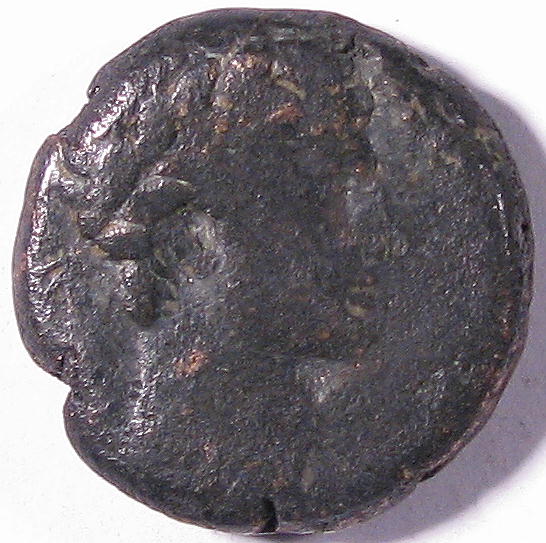 |
THE DECAPOLIS GADARA 20mm BRONZE |
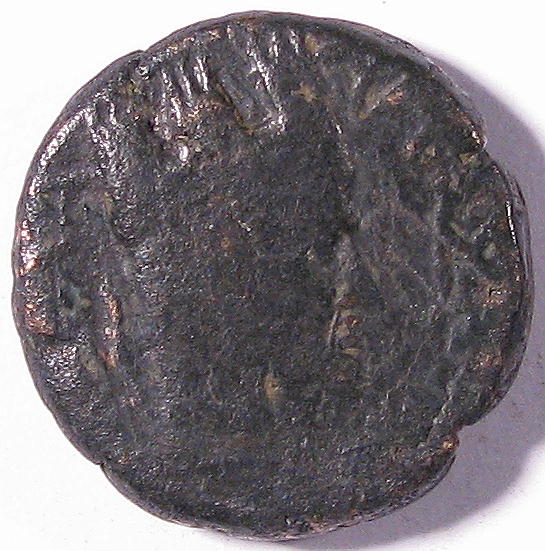 |
| AD 41-54 | VG | SEAR-475 |
This coin measures 20mm in diameter and weighs 10.5g. It shows a bust of Claudius Caesar on the obverse and Tyche on the reverse.
LUKE 8:26-33 "And they arrived at the country of the Gadarenes, which is over against Galilee. And when he went forth to land, there met him out of the city a certain man, which had devils long time, and ware no clothes, neither abode in any house, but in the tombs. When he saw Jesus, he cried out, and fell down before him, and with a loud voice said, What have I to do with thee, Jesus, thou Son of God most high? I beseech thee, torment me not. (For he had commanded the unclean spirit to come out of the man. For oftentimes it had caught him: and he was kept bound with chains and in fetters; and he brake the bands, and was driven of the devil into the wilderness.) And Jesus asked him, saying, What is thy name? And he said, Legion: because many devils were entered into him. And they besought him that he would not command them to go out into the deep. And there was there an herd of many swine feeding on the mountain: and they besought him that he would suffer them to enter into them. And he suffered them. Then went the devils out of the man, and entered into the swine: and the herd ran violently down a steep place into the lake, and were choked."
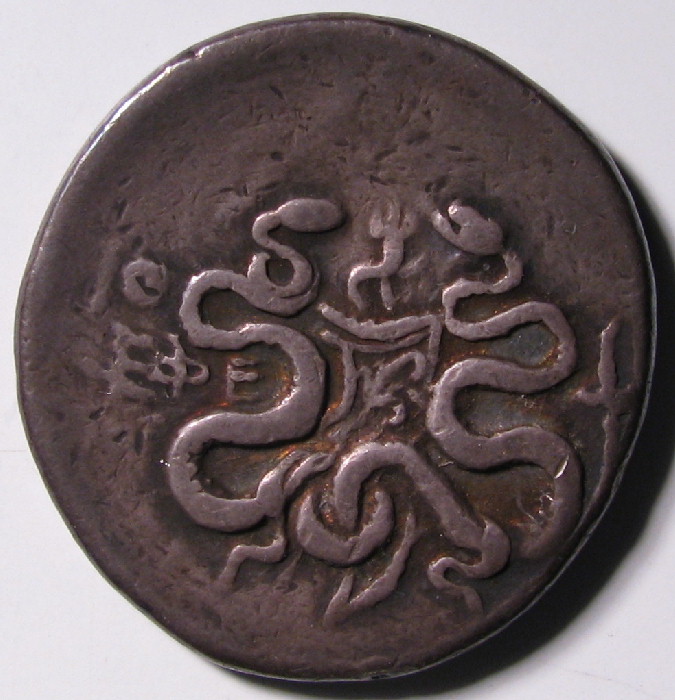 |
PERGAMON
SILVER TETRADRACHM |
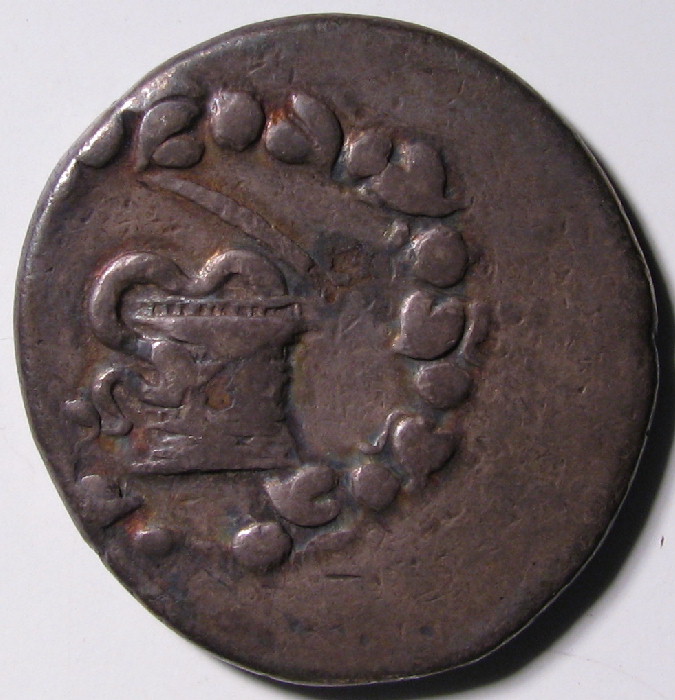 |
| 190-133 BC | F | SEAR-3944 |
This coin measures 28mm in diameter and weighs 12.1g. It shows two coiled serpants on the obverse and cista mystica on the reverse.
REVELATION 2:12 "And to the angel of the church in Pergamos write; These things saith he which hath the sharp sword with two edges. I know thy works, and where thou dwellest, even where Satan's seat is: and thou holdest fast my name, and hast not denied my faith, even in those days wherein Antipas was my faithful martyr, who was slain among you, where Satan dwelleth."
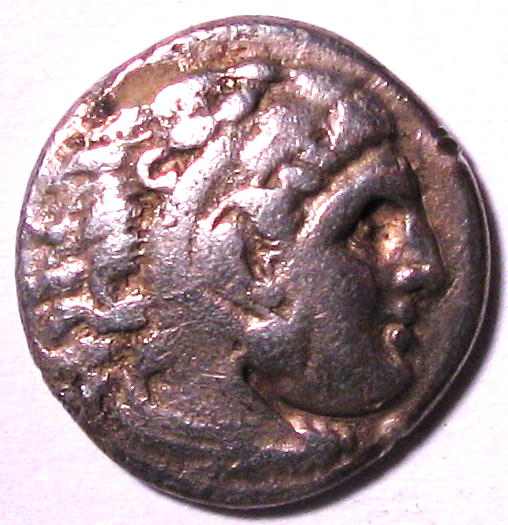 |
MACEDONIA
PHILIP III SILVER DRACHM |
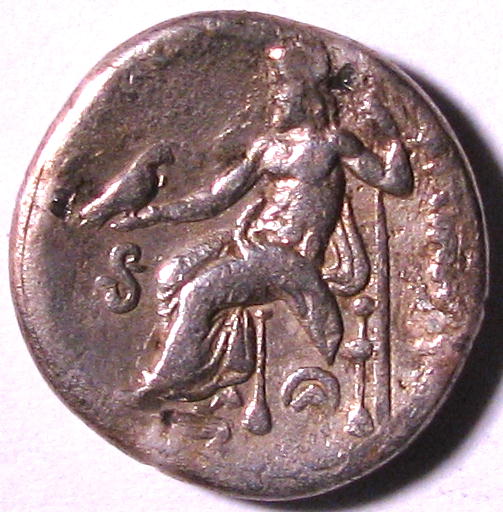 |
| 323-317 BC | VF | SEAR-6750 |
This coin is 18mm in diameter and weighs 4.2g. It shows Alexander the Great wearing a lion-skin heardress on the obverse and Zeus seated on a throne on the reverse.
ACTS 19:22 "So he sent into Macedonia two of them that ministered unto him, Timotheus and Erastus; but he himself stayed in Asia for a season."
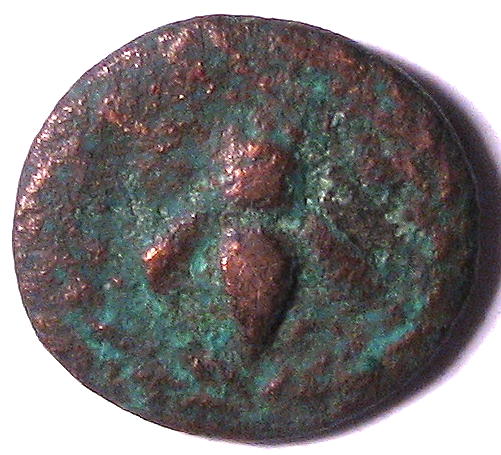 |
ANCIENT GREECE IONIA EPHESUS 16mm BRONZE |
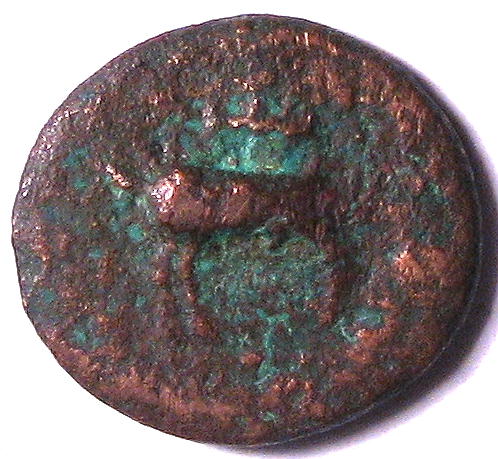 |
| 280-258 BC | VF | SEAR-4405 |
This coin is 16mm in diameter and weighs 2.4g. It shows a bee on the obverse and a stag on the reverse.
REVELATION 2:1-2 "Unto the angel of the church of Ephesus write; These things saith he that holdeth the seven stars in his right hand, who walketh in the midst of the seven golden candlesticks; I know thy works, and thy labour, and thy patience, and how thou canst not bear them which are evil: and thou hast tried them which say they are apostles, and are not, and hast found them liars:"
COINS OF THE ROMANS:
 |
ROMAN
IMPERITORIAL
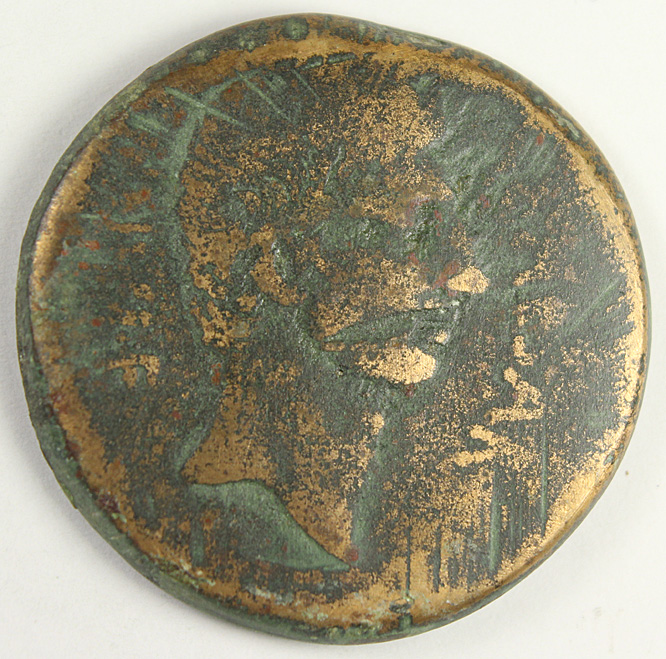
JULIUS CAESAR Assassinated 44 BC BRONZE SESTERTIUS |
 |
|
38 BC |
F | SEAR-1569 |
 |
ROMAN EMPIRE
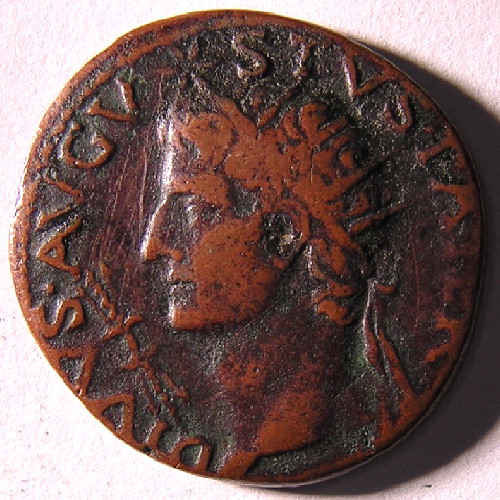
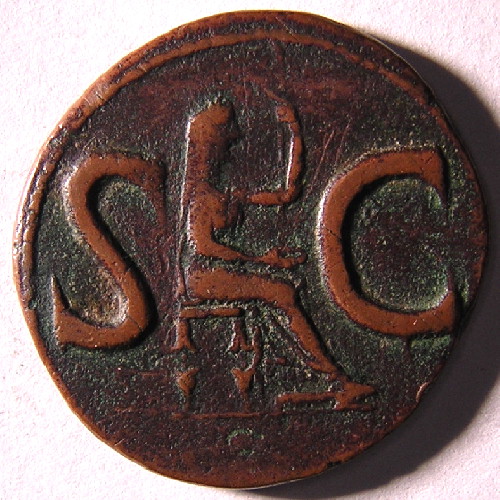
AUGUSTUS CAESAR 27 BC-AD 14 BRONZE AS |
 |
|
AD 15-16 |
VF | SEAR-1788 |
Augustus Caesar was the first, and despite poor health and frequent illness, the longest reigning Roman Emperor. Augustus rebuilt Rome's financial system and restored order to an empire ravaged by civil war. In Judaea he established a Prefect's office where the Prefect would report directly back to Rome. The first Prefect named by Augustus was Coponius who served from AD 6-9. It was during the long reign of Augustus that Christ was born in Bethlehem in c. 6-5 BC.
This coin measures 28mm in diameter and weighs 10.3g. It shows a bust of Augustus on the obverse and Livia seated on the reverse.
LUKE 2:1 "And it came to pass in those days, that there went out a decree from Caesar Augustus, that all the world should be taxed."
 |
ROMAN EMPIRE
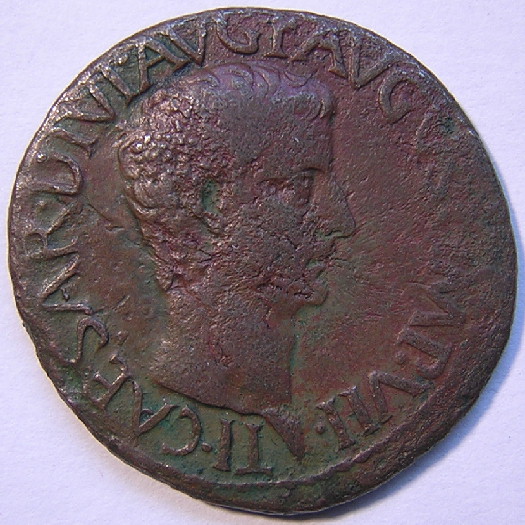
TIBERIUS CAESAR AD 14-37 BRONZE AS |
 |
|
AD 22-23 |
F | SEAR-1769v |
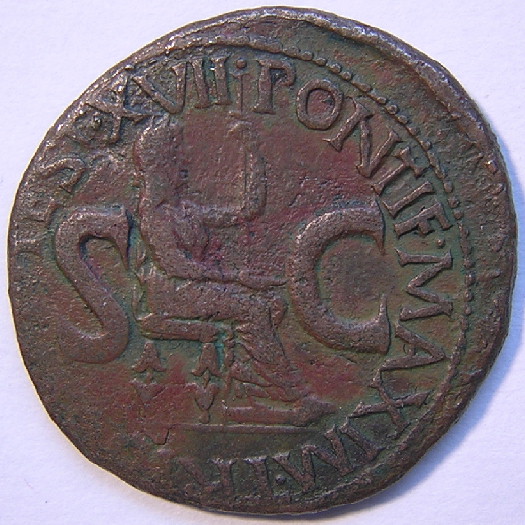
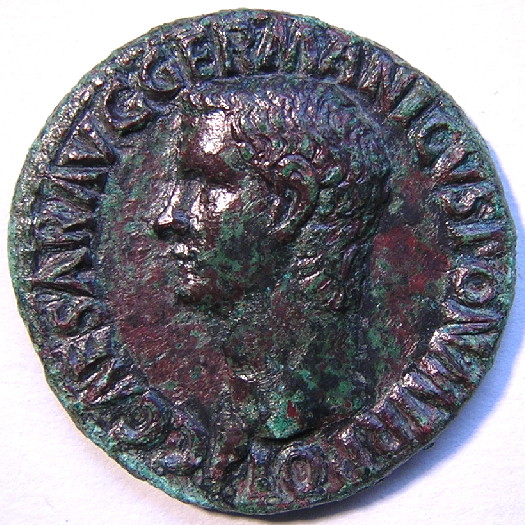
Tiberius Caesar was the adopted son of Augustus. Although an able military leader and administrator, Tiberius tended to be reclusive and suspicious, he could also be quite cruel. In AD 26 he retired to the island of Capreae and although he reigned another eleven years he never again set foot in Rome. The ministry of Christ took place during the reign of Tiberius and it is possible that Pontius Pilate, Tiberius' Prefect in Judaea would have informed the Emperor of the crucifixion of Christ in AD 30.
This coin measures 29mm in diameter and weighs 10.1g. It shows a bust of Tiberius on the obverse and Livia seated on the reverse.
LUKE 3:1-2 "Now in the fifteenth year of the reign of Tiberius Caesar, Pontius Pilate being governor of Judaea, and Herod being tetrarch of Galilee, and his brother Philip tetrarch of Ituraea and of the region of Trachonitis, and Lysanias the tetrarch of Abilene, Annas and Caiaphas being the high priests, the word of God came unto John the son of Zacharias in the wilderness."
 |
ROMAN EMPIRE
CAIUS CAESAR AD 37-41 BRONZE AS |
 |
|
AD 37-38 |
VF | SEAR-1803 |
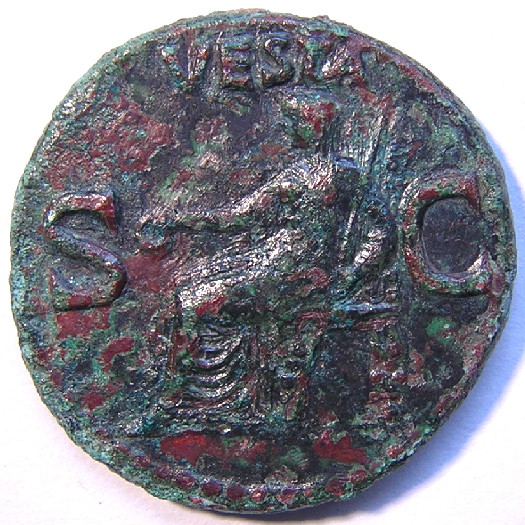
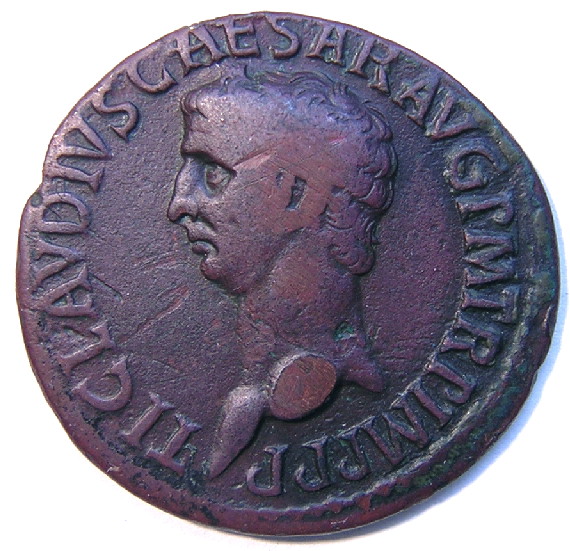
Caius Caesar is more commonly known by his nickname "Caligula." Although his reign started well, Caligula soon began to show signs of madness and extreme cruelty. One example of his madness occurred when he raised an invasion force with the stated intention of conquering Britannia. Caligula lead this force himself and when he reached the English Channel he ordered his troops to gather shells, he they returned to Rome. Caligula also ordered a statue of himself to be erected in the Jewish Temple and insisted that he be worshiped as a god. Caligula was assassinated in the Imperial Palace in AD 41.
This coin measures 27mm in diameter and weighs 10.2g. It shows a bust of Caligula on the obverse and Vesta seated on the reverse.
 |
ROMAN EMPIRE
CLAUDIUS CAESAR AD 41-54 BRONZE AS |
 |
|
AD 42 |
VF | SEAR-1860 |
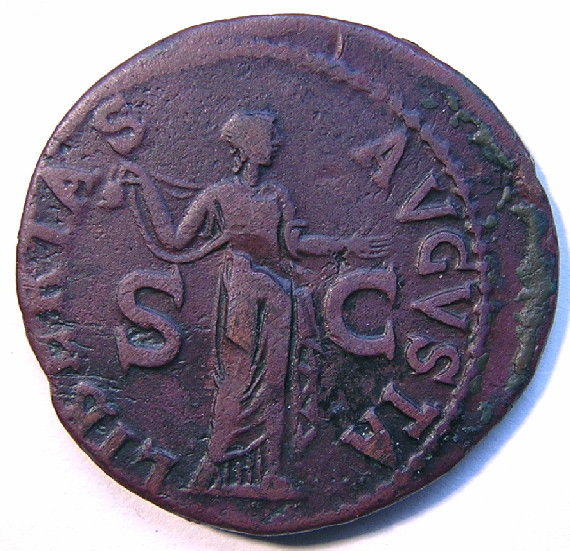
After the assassination of Caligula, Claudius was found hiding behind a curtain in the Imperial Palace and was proclaimed Emperor. Claudius reigned with moderation is most respects and is regarded as one of Rome's better Emperors. However, in AD 49 Claudius issued an edict banishing all Jews from Rome, this could have been due to to the growing influence of Christians, who the Romans at this time regarded as a Jewish sect.
This coin measures 29mm in diameter and weighs 10g. It shows a bust of Claudius on the obverse and Libertas standing on the reverse.
ACTS 18:2 "And found a certain Jew named Aquila, born in Pontus, lately come from Italy, with his wife Priscilla; (because that Claudius had commanded all Jews to depart from Rome:) and came unto them."
 |
ROMAN EMPIRE
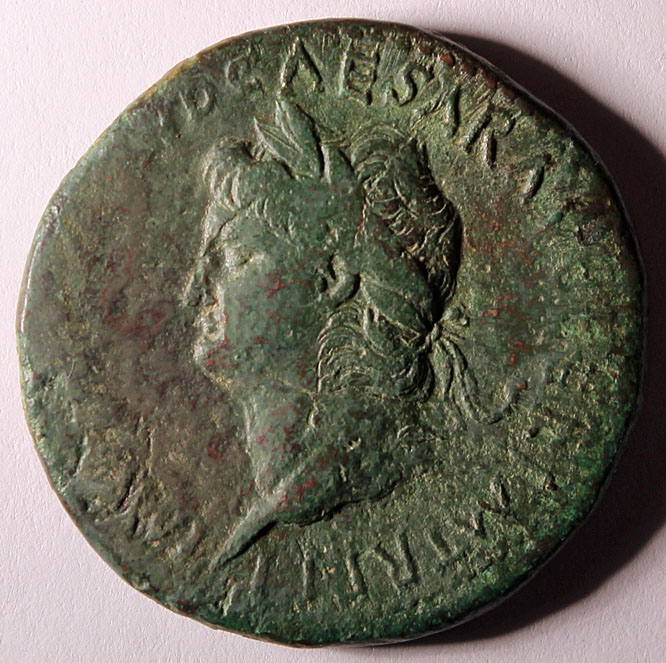
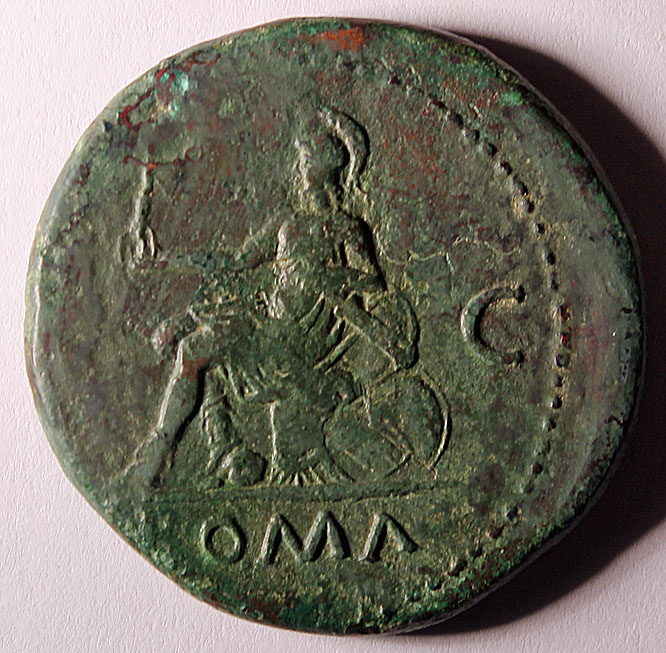
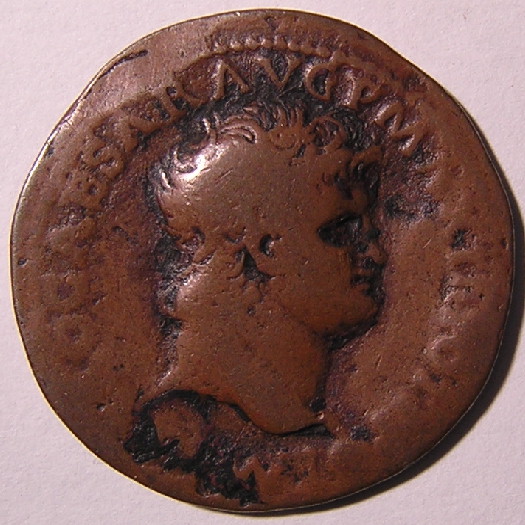
NERO AD 54-68 BRONZE SESTERTIUS |
 |
| AD 66 | VF | SEAR-1961 |
 |
ROMAN EMPIRE
NERO AD 54-68 BRONZE AS |
 |
|
AD 65 |
VG | SEAR-1976 |
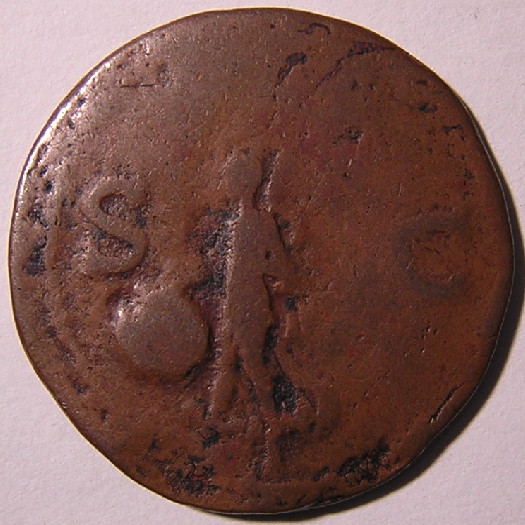
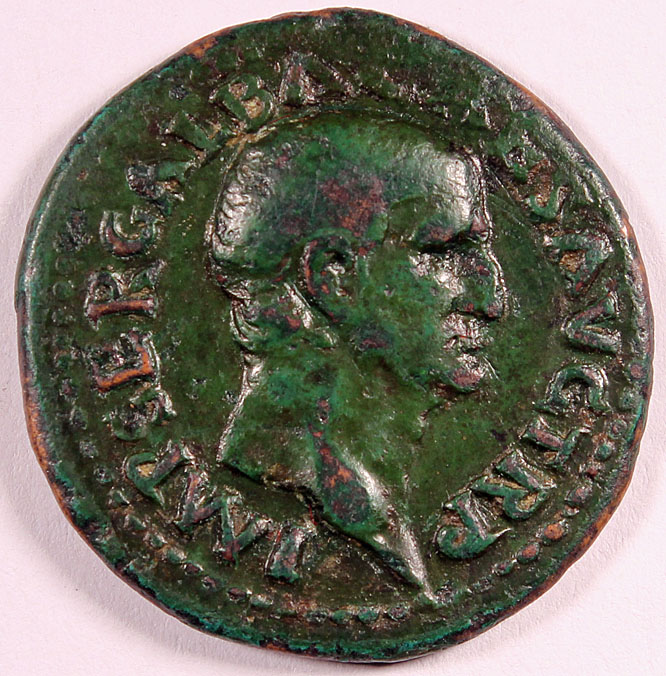
Bronze As of the Roman Emperor Nero. Nero, who ruled Rome from AD 54-68, launched the first general persecution of Christians in AD 65. The Apostle Paul was martyred in Rome during Nero's persecution.
This coin from the Rome mint measures 29mm in diameter and weighs 8.4g. The obverse shows a bust of Nero facing right and the reverse a winged Victory.
ACTS 27: 23-24 "For there stood by me this night the angel of God, whose I am, and whom I serve, Saying, Fear not, Paul; thou must be brought before Caesar: and, lo, God hath given thee all them that sail with thee."
 |
ROMAN EMPIRE
GALBA AD 68-69 BRONZE AS |
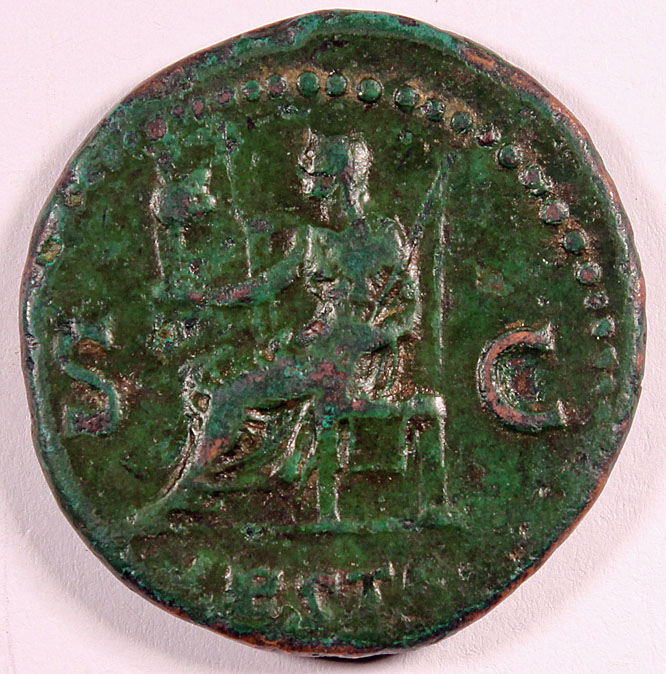 |
| AD 68 | F | SEAR-2138 |
 |
ROMAN EMPIRE
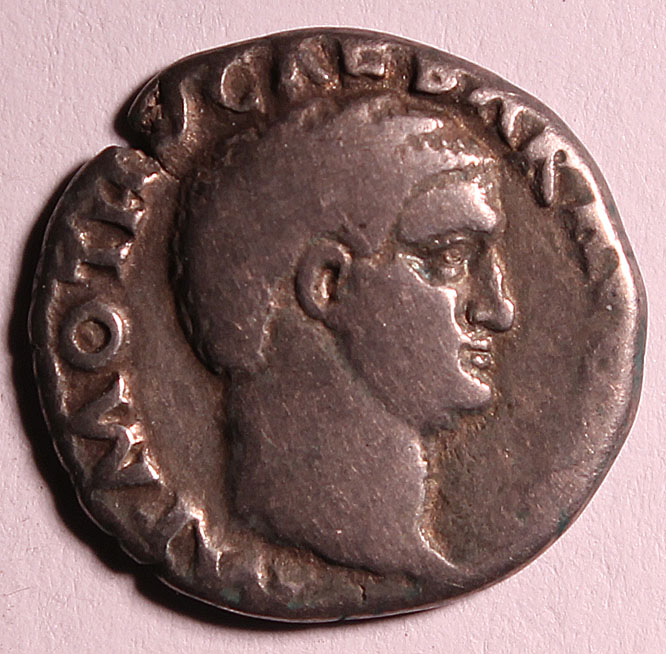
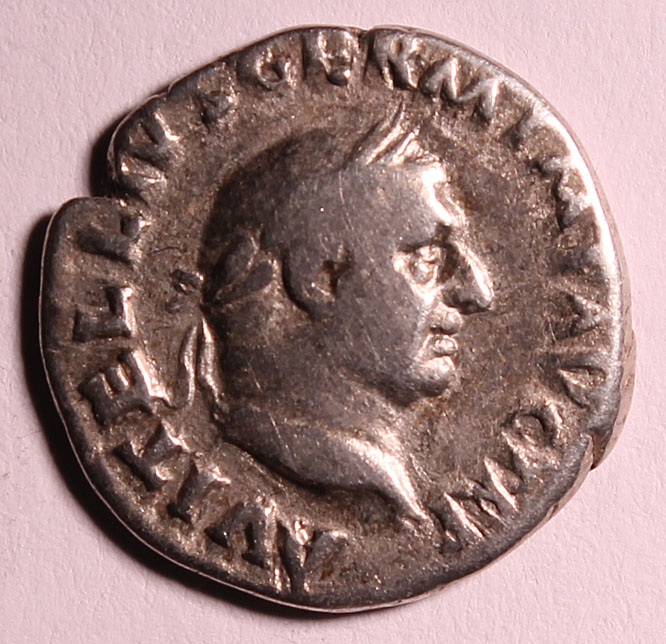
OTHO AD 69 SILVER DENARIUS |
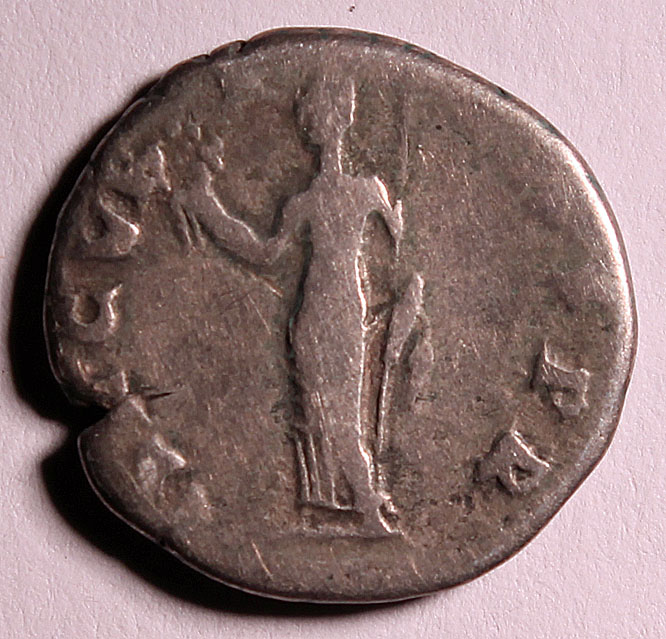 |
| AD 69 | F | SEAR-2162 |
 |
ROMAN EMPIRE
VITELLIUS AD 69 SILVER DENARIUS |
 |
| AD 69 | F | SEAR-2200 |
 |
ROMAN EMPIRE
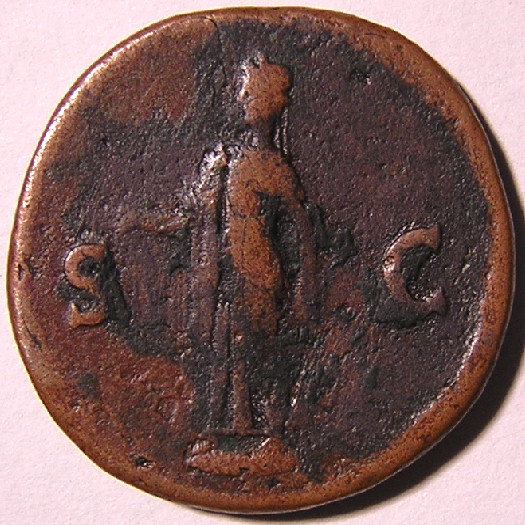
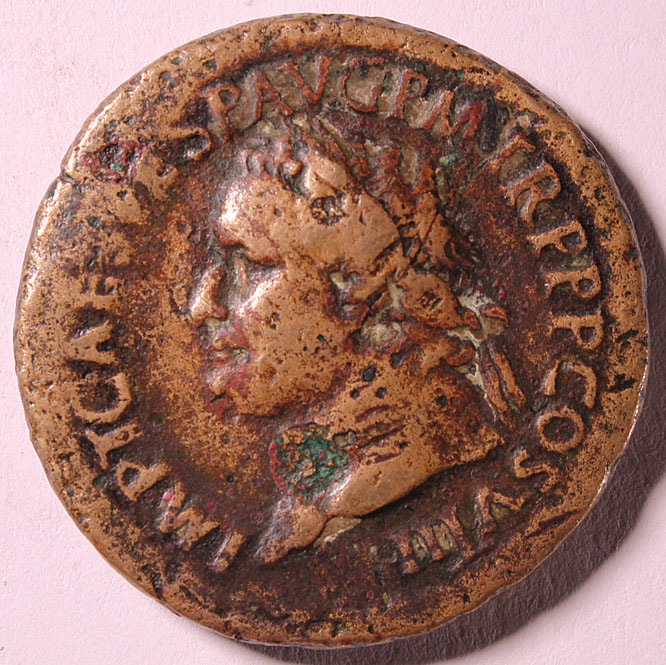
VESPASIAN AD 69-79 BRONZE AS |
 |
|
AD 74 |
F | SEAR-2361 |
When the Jews rebelled against Rome in AD 66, Nero selected the general Vespasian to put down the uprising. After the death of Nero in AD 68 Rome erupted into civil war, the years 68-69 saw no less than five emperors. It was in the midst of this turmoil that Vespasian's troops declared him Emperor and he marched on Rome. During Vespasian's reign the Jewish Uprising was put down, order was restored and the Colosseum was built.
This coin from the Rome mint measures 26mm in diameter and weighs 8.3g. It shows a bust of Vespasian on the obverse and Spes standing on the reverse.
 |
ROMAN EMPIRE
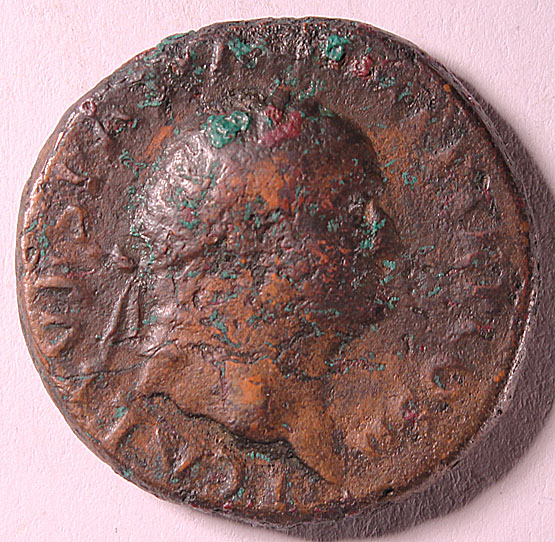
TITUS AD 79-81 BRONZE SESTERTIUS |
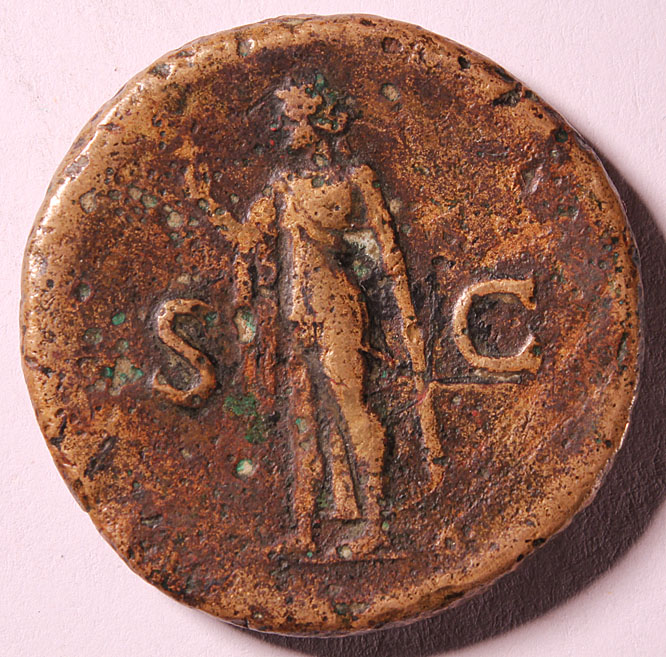 |
| AD 80 | F | SEAR-2530v |
 |
ROMAN EMPIRE
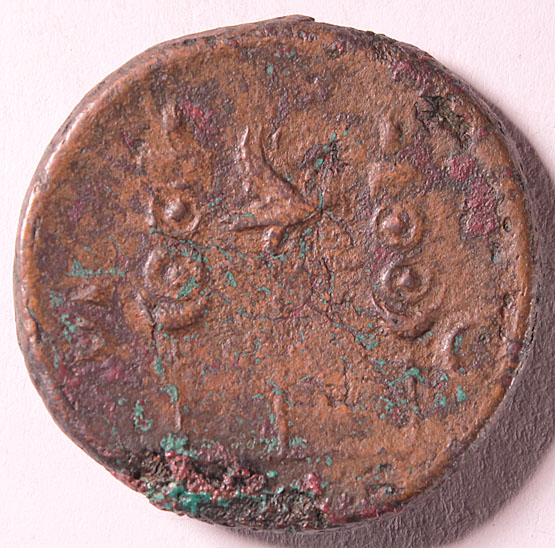
TITUS AD 79-81 BRONZE AS |
 |
|
AD 72 |
F | SEAR-not listed |
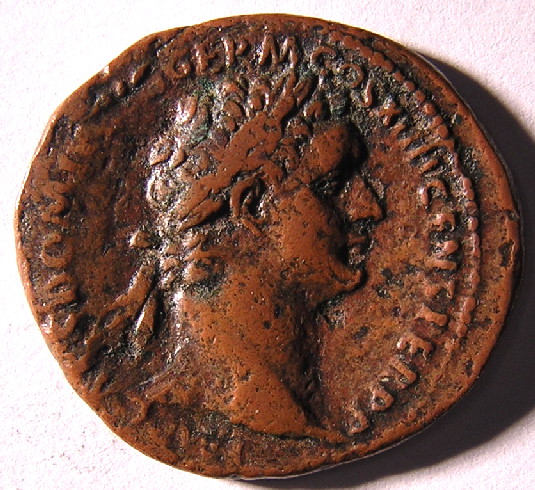
When Vespasian was declared Emperor in AD 69 he placed his son Titus in charge of operations in Judaea. Titus defeated the Jews in AD 70 and destroyed the Jewish Temple. It is reported that over a million Jews were killed in the aftermath of Titus' victory.
This coin from the Rome mint measures 25mm in diameter and weighs 11.2g. It shows a bust of Titus on the obverse and military standards on the reverse. The standards on this coin could allude to Titus' success in the Jewish Uprising of AD 66-70.
MATTHEW 24:1-2 "And Jesus went out, and departed from the temple: and his disciples came to him for to shew him the buildings of the temple. And Jesus said unto them, See ye not all these things? verily I say unto you, There shall not be left here one stone upon another, that shall not be thrown down.
 |
ROMAN EMPIRE
DOMITIAN AD 81-96 BRONZE AS |
 |
|
AD 90-91 |
VF | SEAR-2817 |
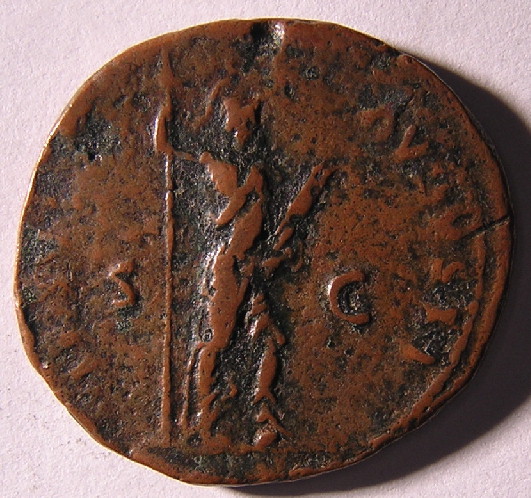
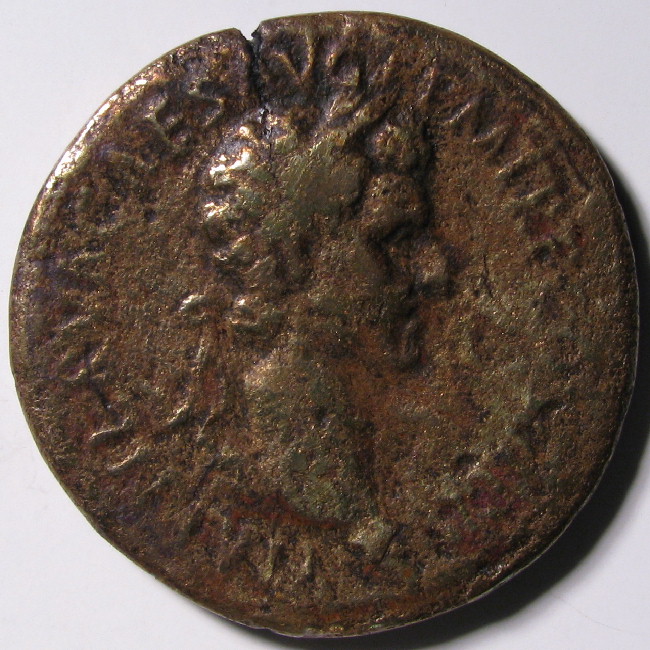
Domitian ruled Rome from AD 81 until his assassination in AD 96. Domitian launched the second general persecution of Christians during the later years of his reign. The Apostle John was banished to the Isle of Patmos by Domitian and it was there that he wrote the Book of Revelation.
This coin from the Rome mint measures 19mm in diameter and weighs 3.2g. The obverse shows a bust of Domitian facing right and the reverse shows Minerva.
REVELATION 1:9 "I John...was in the isle that is called Patmos."
 |
ROMAN EMPIRE
NERVA AD 96-98 BRONZE SESTERTIUS |
 |
|
AD 97 |
F | SEAR-3045 |
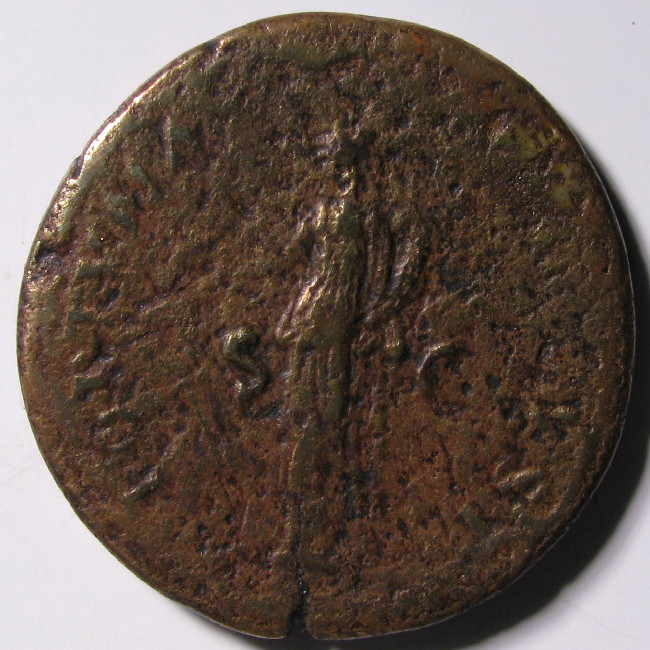
Although his reign was brief, Nerva is remembered as a wise ruler. It appears as though he was involved in the plot that lead to the assassination of Domitian and in any event he was selected as Emperor after Domitian's death. Nerva enacted a policy of toleration towards the Jews and Christians, one of Nerva's acts as Emperor was to free the Apostle John from his banishment on the Isle of Patmos.
This coin measures 35mm in diameter and weighs 22.5g. It shows a bust of Nerva on the obverse and Fortuna standing on the reverse.
 |
ROMAN EMPIRE
TRAJAN AD 98-117 SILVER DENARIUS |
 |
|
AD 99 |
VF | SEAR-3143 |
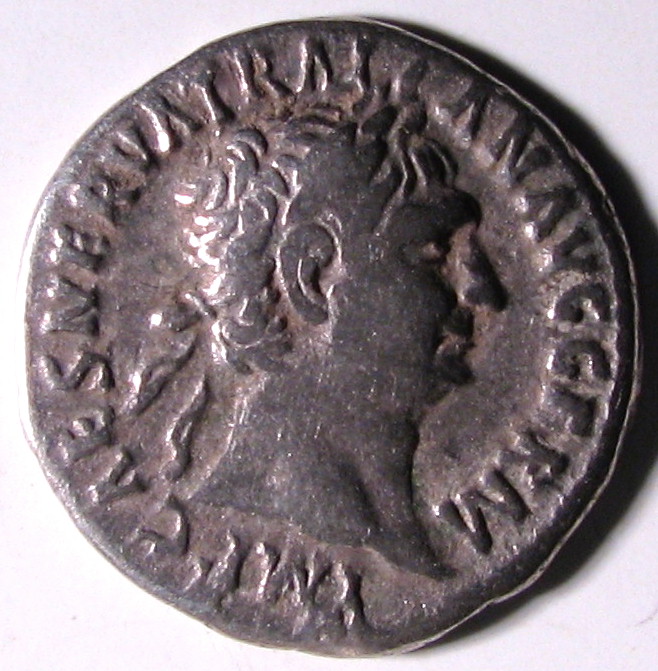
Trajan was adopted by Nerva and became Emperor on the later's death in AD 98. Trajan generally continued Nerva's policy of mederation towards the Jews and Christians, but did engage in persecution of the Christians in some cases. To be a Christian remained a capital crime even during this moderate reign. It was during this reign that John, the last living Apostle, finally passed away.
This coin measures 18mm in diameter and weighs 3.4g. It shows a bust of Trajan on the obverse and Vesta seated on the reverse.
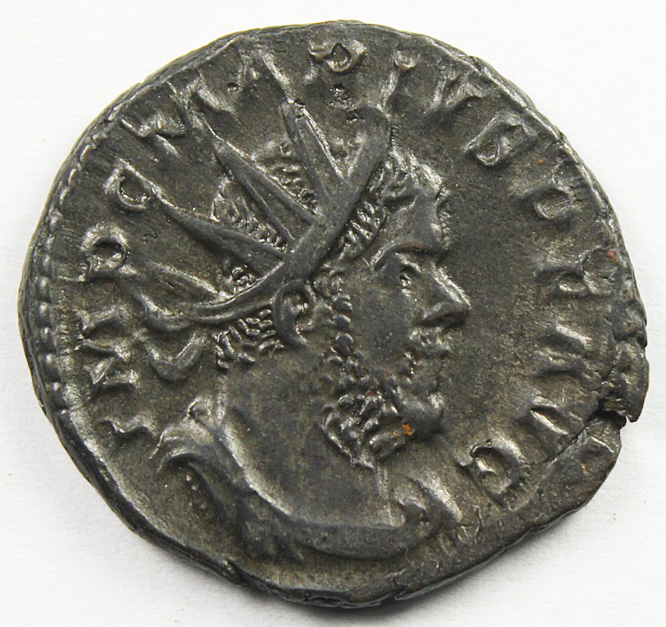 |
GALLIC EMPIRE
MARIUS AD 268 AE ANTONINIANUS |
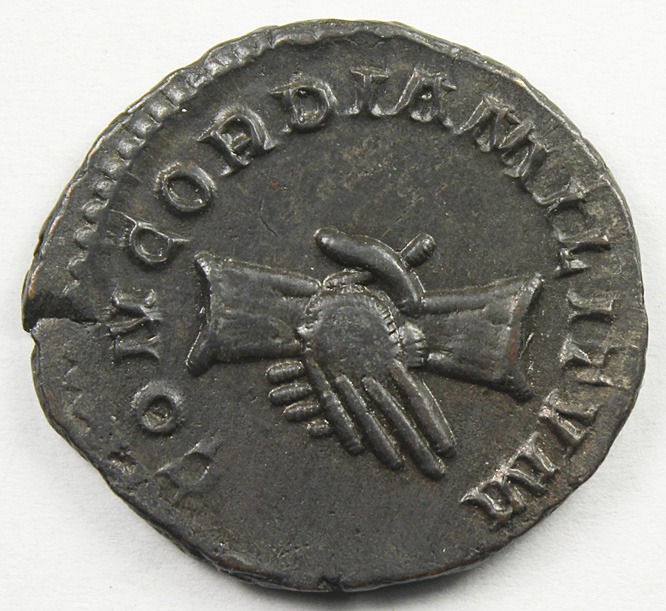 |
|
AD 268 |
EF | RIC-7 |
ROMAN PERSECUTORS OF THE CHRISTIANS:
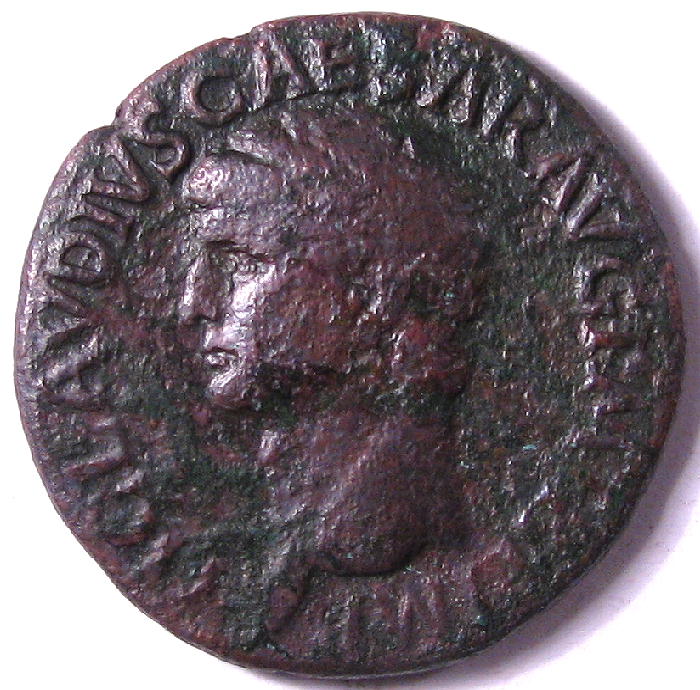 |
ROMAN EMPIRE
CLAUDIUS CAESAR AD 41-54 BRONZE AS |
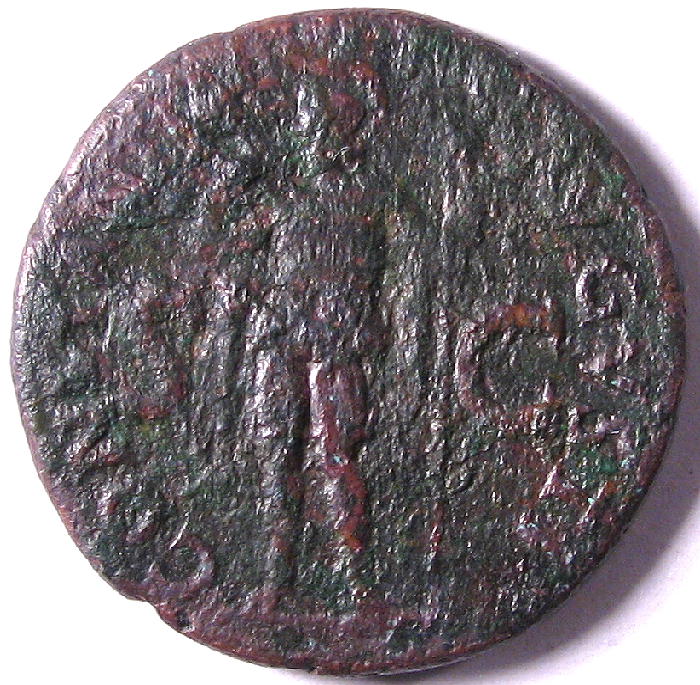 |
| AD 41-42 | F | SEAR-1857 |
The first and perhaps mildest persecution took place under Claudius. In AD 49 Claudius issued an edict banishing all Jews from Rome, this could have been due to to the growing influence of Christians, who the Romans at this time still regarded as a Jewish sect. However, unlike later persecutions no executions are recorded during this one.
This coin measures 28mm in diameter and weighs 10.8g. It shows a bust of Claudius an the obverse and Constantia on the reverse.
 |
ROMAN EMPIRE
NERO AD 54-68 BRONZE AS |
 |
|
AD 65 |
F | SEAR-1976 |
"The First General Persecution"
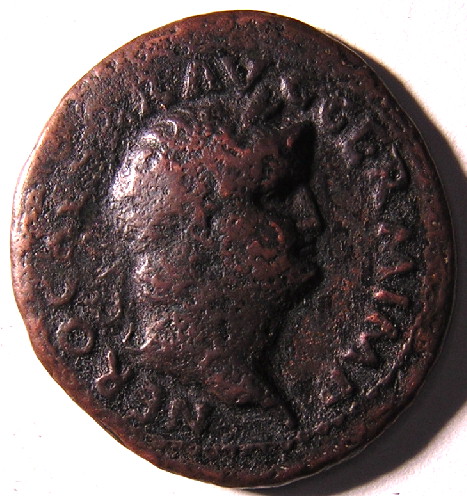
The first full scale persecution of the Christians took place during the reign of the Emperor Nero. It is recorded that Nero had some Christians sewn up in the skins of animals and attacked by wild dogs, others were coated with wax or oil and used as torches to light Nero's gardens at night. It was during this persecution that the Apostles Peter and Paul were executed.
This coin measures 28mm in diameter and weighs 9.6g. It shows a bust of Nero an the obverse and a Victory on the reverse.
 |
ROMAN EMPIRE
DOMITIAN AD 81-96 BRONZE AS |
 |
|
AD 85 |
VF | SEAR-2806 |
"The Second General Persecution"
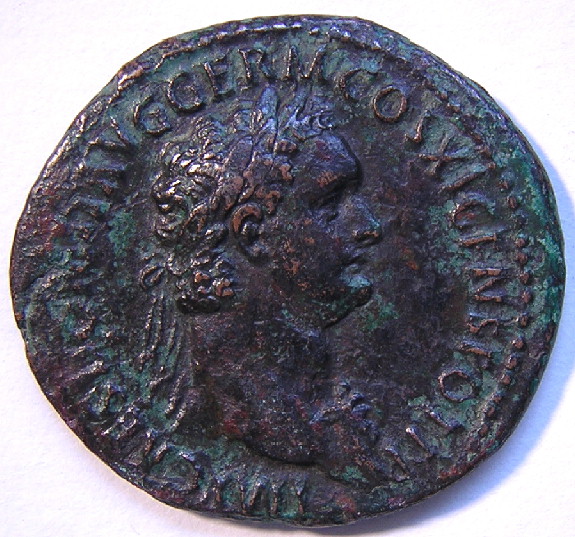
The reign of Domitian saw the second great persecution of Christians. By this time some members of the Imperial family had become Christian, Domitian ordered their execution on grounds that their beliefs were unpatriotic. In addition some members of the Roman Senate were put to death as Christians. Unlike the first persecution under Nero which was mostly localized in Italy, Domitian's persecution covered the entire Empire. Among those to suffer were Timothy, to whom Paul address two of his epistles and the Apostle John who was boiled in hot oil but survived. John was then banished to the island of Patmos where he wrote the Book of Revelation.
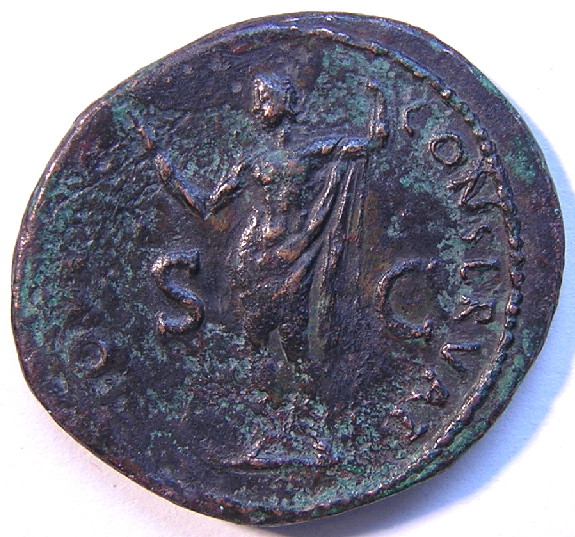
This coin measures 30mm in diameter and weighs 11.2g. It shows a bust of Domitian an the obverse and a Jupiter on the reverse.
 |
ROMAN EMPIRE
TRAJAN AD 98-117 SILVER DENARIUS |
 |
|
AD 106 |
F | SEAR-3168 |
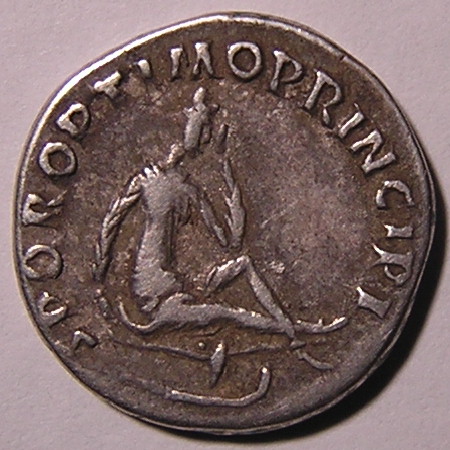
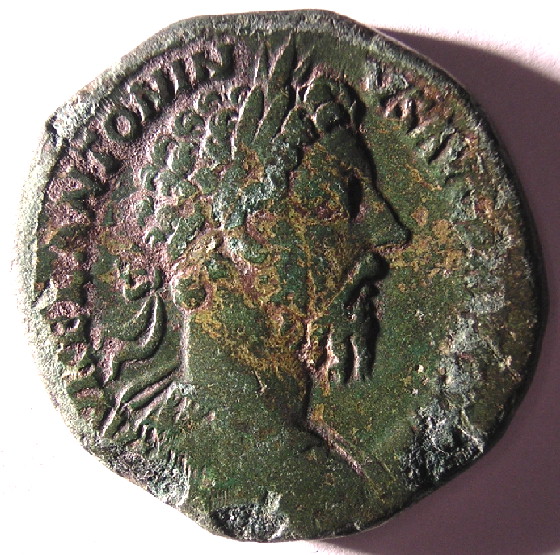
"The Third General Persecution"
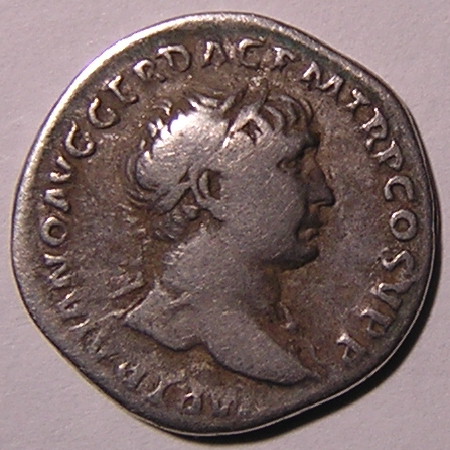
In about AD 112, Pliny the Younger, governor of Pontus sent a letter to the Emperor Trajan asking for guidance in how to deal with Christians. He explained to the Emperor that he executed only those Christians who maintained their faith, he freed those who cursed Christ and offered sacrifice to the Roman gods. Trajan sent a reply to Pliny commending his actions and these remarkable letters have survived. It is reported that at the height of this persecution thousands of Christians were being put to death daily.
This coin measures 18mm in diameter and weighs 3.5g. It shows a bust of Trajan an the obverse and a Dacian captive on the reverse.
 |
ROMAN EMPIRE
MARCUS AURELIUS AD 161-180 BRONZE SESTERTIUS |
 |
|
AD 180 |
VF | SEAR-5017 |
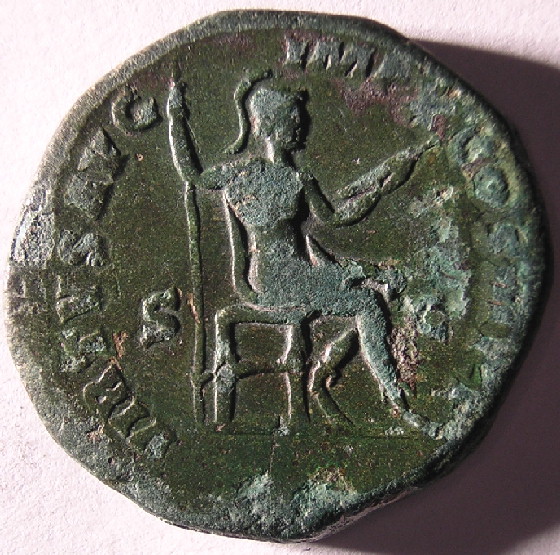
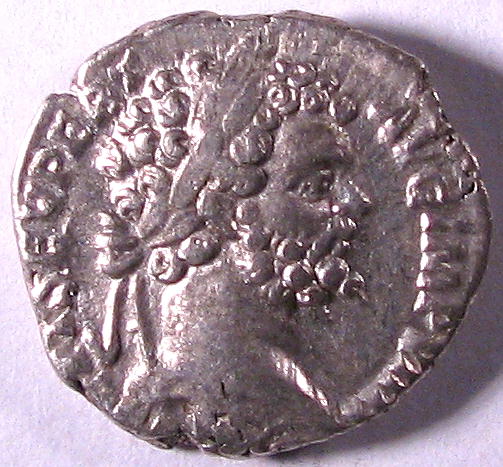
"The Fourth General Persecution"
Marcus Aurelius is commonly regarded as a benevolent philosopher-king, however his persecution of the Christians was perhaps the most severe to date. Aurelius had a personal dislike of Christians and as this persecution advanced it became more cruel, starting with beheadings, then seeing Christians fed to wild beasts and finally use of the Iron Chair. The Iron Chair would be heated to red hot and the the victim would be forced to sit on it. Among those put to death during this persecution was the elderly Polycarp of Smyrna, a disciple of the Apostle John. Despite being in his nineties, Polycarp was burned at the stake. It was during this persecution that Christians first took to the Catacombs under Rome for saftey.
This coin measures 32mm in diameter and weighs 24.3g. It shows a bust of Aurelius an the obverse and Virtus seated on the reverse.
 |
ROMAN EMPIRE
SEPTIMIUS SEVERUS AD 193-211 SILVER DENARIUS |
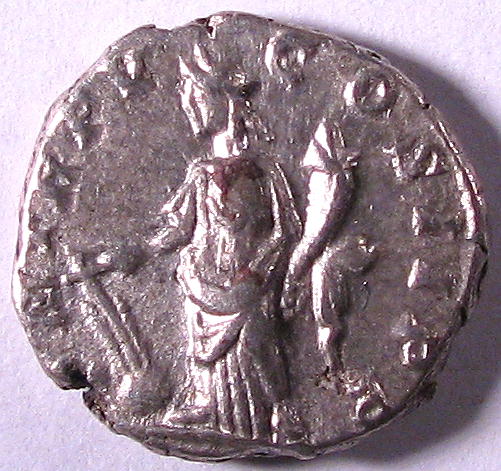 |
| AD 197 | VF | SEAR-6330 |
"The Fifth General Persecution"
Having been nursed back to health by a Christian after a serious illness, Severus did not hold any personal ill-will towards Christians. However, he was also unwilling to risk angering the public, so he refused to step in and bring a halt to the persecutions. Many Christians suffered death during the persecution.
This coin measures 17mm in diameter and weighs 3.5g. It shows a bust of Severus an the obverse and Fortuna on the reverse.
 |
ROMAN EMPIRE
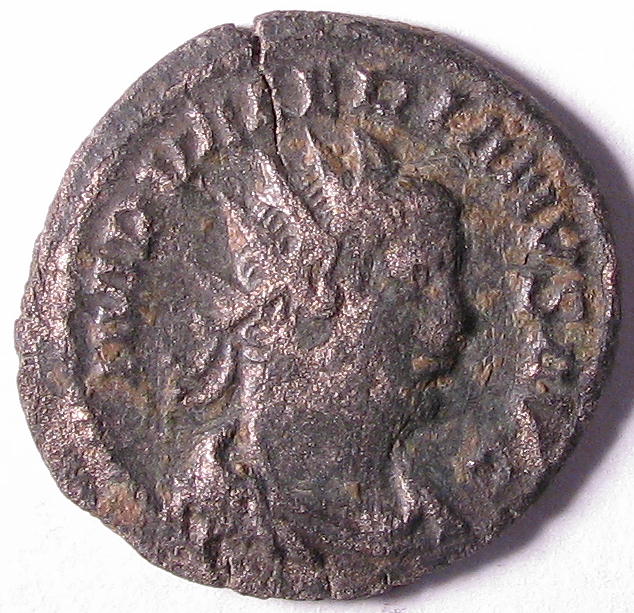
VALERIAN AD 253-260 BRONZE ANTONINIANUS |
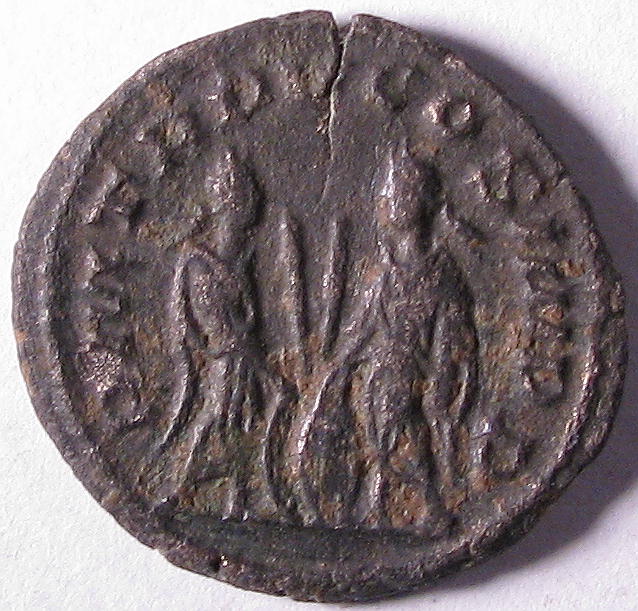 |
| AD 257 | F | SEAR-9962 |
"The Eighth General Persecution"
Valerian seemed to hold a special hatred for Christians and during his persecution fire was the method of execution most favored. Victims were tormented with burning hot irons and tongs, burned alive or roasted on red hot iron slabs. In the eyes of many Valerian received his just reward for his inhumanity. In AD 260 he was captured in battle by the Persian Emperor Sapor and carried back to Persia as a slave. Valerian was treated with the greatest indignity, often being forced to serve as a footstool for the Persian Emperor. After seven years of captivity, Sapor ordered Valerian's eyes to be put out and later had him flayed alive and rubbed with salt.
This coin measures 22mm in diameter and weighs 4.1g. It shows a bust of Valerian an the obverse and Valerian and Gallienus on the reverse.
 |
ROMAN EMPIRE
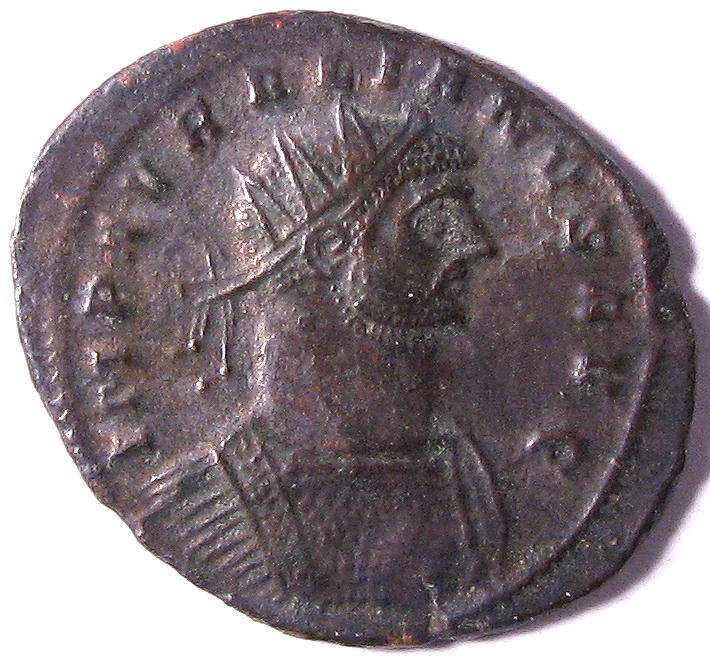
AURELIAN AD 270-275 BRONZE ANTONINIANUS |
 |
| AD 272 | EF | SEAR-11522 |
"The Ninth General Persecution"
This persecution was mild in comparison to those before and after it. This may have been due to the fact that Aurelian died shortly after the persecution began. The names of only two of those executed have been recorded, but many others are said to have died.
This coin measures 26mm in diameter and weighs 3.2g. It shows a bust of Aurelian an the obverse and Aurelian and Concordia on the reverse.
 |
ROMAN EMPIRE
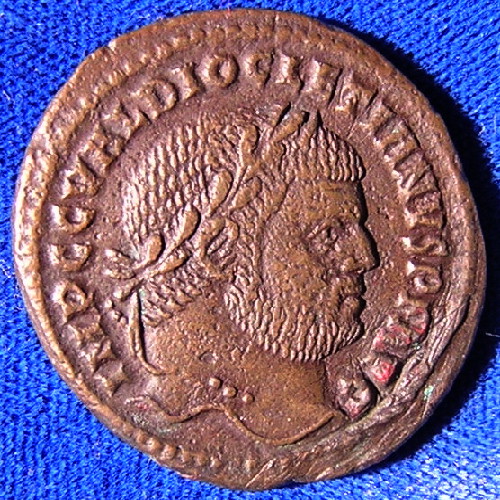
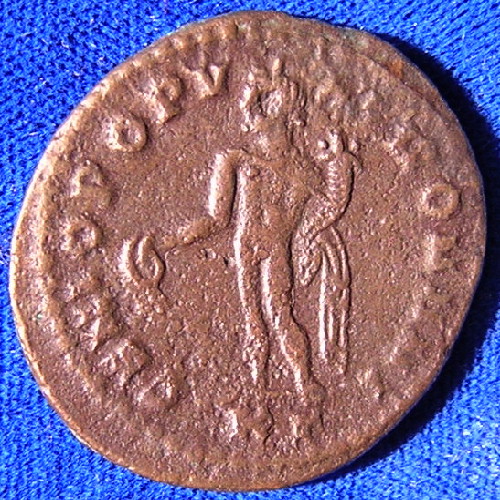
DIOCLETIAN AD 284-305 BRONZE FOLLIS |
 |
|
AD 296-305 |
VF | SR-3433 (old) |
"The Tenth General Persecution"
This was the last and one of the most severe persecutions. Diocletian seems to have been encouraged to greater excess by his junior Emperor Galerius. In addition to countless executions, attempts were made to rid the world of all Christian churches and books. It is recorded that many of those fortunate enough to escape death were punished by having their ears cut off or eyes put out. Diocletian, unlike any other Roman Emperor, retired from the throne in AD 305 and took up gardening.
This coin measures 29mm in diameter and weighs 9.1g. It shows a bust of Diocletian an the obverse and Genius on the reverse.
BIBLICAL ARTIFACTS
OLD TESTAMENT ARTIFACTS:
POTTERY:
 |
||
|
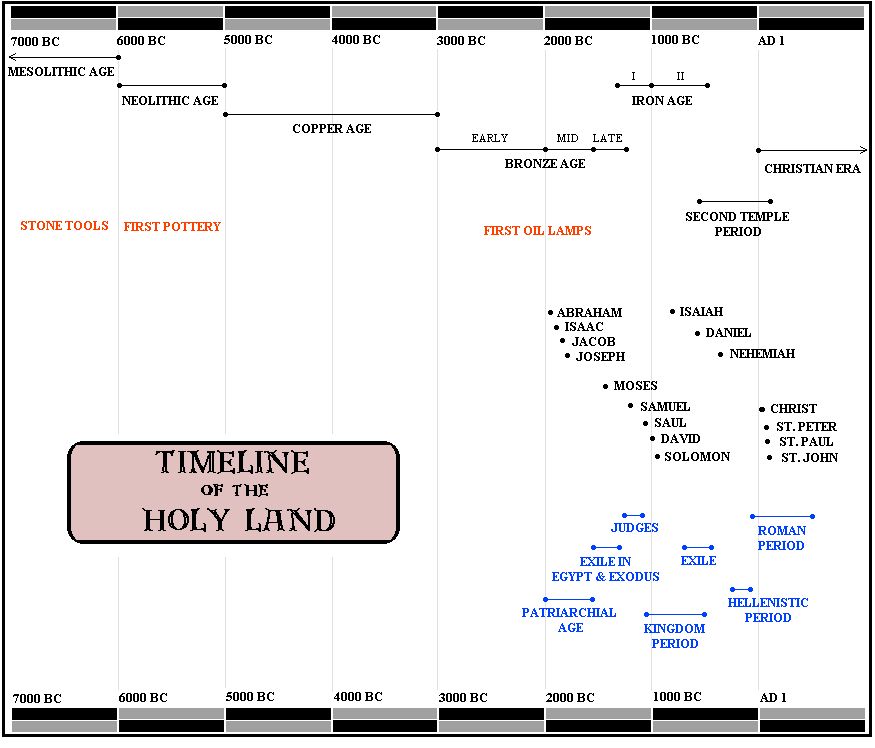
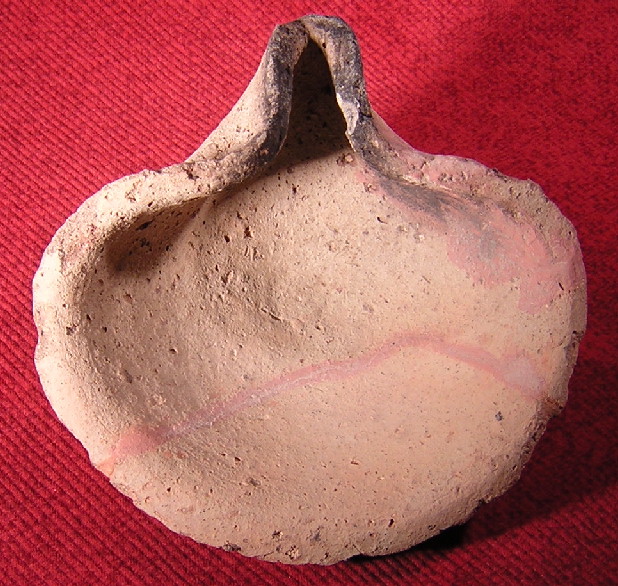
Late Bronze Age c. 1500-1200 BC |
ISRAEL
TERRACOTTA OIL LAMP |
ADLER 8-9 |
Terracotta oil lamp from the time of Moses. This lamp was made in Canaan between 1500-1200 BC. Lamps of this type used a rope or fabric wick and burned olive oil as a fuel. These were commonly used in everyday life for lighting homes and provide a great deal of light. Ancient homes excavated in archeological digs often have small niches in the walls for lamps of this sort. They were also used in shops, temples and public buildings and at religious events. These lamps are also often found in tombs, where they were intended to illuminate the way of the dead into the next life.
This late Bronze Age lamp measures 15cm long, 15cm wide and is 6cm high. It is a pinched spout saucer type lamp with heavy carbon deposits around the spout area, the bowl has been broken and restored. These lamps are dated by the width of the spout.
EXODUS 27:20 "And thou shalt command the children of Israel, that they bring thee pure oil olive beaten for the light, to cause the lamp to burn always."
 |
||
|
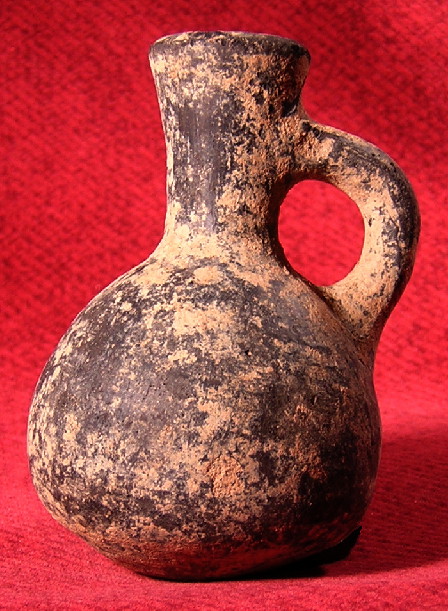
Early Iron Age c. 1000-800 BC |
ISRAEL
BLACK WARE JUGLET |
AMIRAN:
Plate 86, No. 12* |
Black ware juglet from the time of Saul, David and Solomon. These black jugs stand apart from the typical tan to reddish pottery used in ancient Israel. Items of this type would have been used to store rare oil or perfume. Small pottery vessels were common in everyday use in ancient Israel during all periods from Neolithic times. Because it was so widely used pottery is the tool most often used by archaeologists to date sites.
This early Iron Age juglet measures 9cm tall and is about 6cm wide. It was wheel-made with an applied handle.
*see also: Amiran pgs. 256 & 263 (photo no. 263) and Malloy #666
II KINGS 4:6 "And it came to pass, when the vessels were full, that she said unto her son, Bring me yet a vessel. And he said unto her, There is not a vessel more. And the oil stayed."
METAL ARTIFACTS:
|
|
||
|
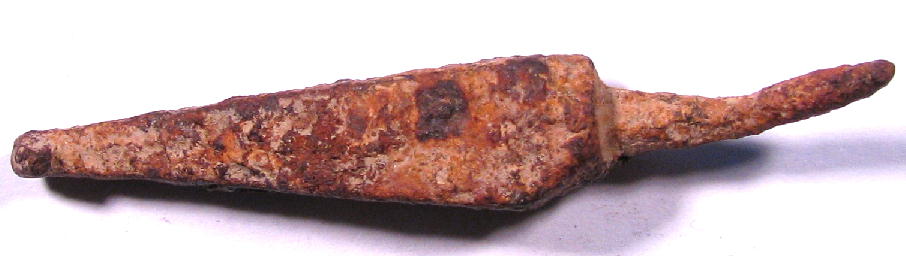
Late Iron Age c. 800-586 BC |
ISRAEL IRON ARROW POINT |
MALLOY-553 |
The first arrow points of iron were used in the Holy Land from about 1300 BC and would have been used alongside the more common bronze points. Archers would often have carried arrows with more than one type of point. Flattened arrow points were designed to slice flesh, while narrow points of this type were intended for long-distance shots.
This arrow point measures 5cm in length and is four sided with a long tang. The tip is deformed from impact with a target.
Petrie Class J - Square Head
II KINGS 9:24 "And Jehu drew a bow with his full strength, and smote Jehoram between his arms, and the arrow went out at his heart, and he sunk down in his chariot."
NEW TESTAMENT ARTIFACTS:
METAL ARTIFACTS:
 |
||
| c. First Century AD |
ROMAN
EMPIRE
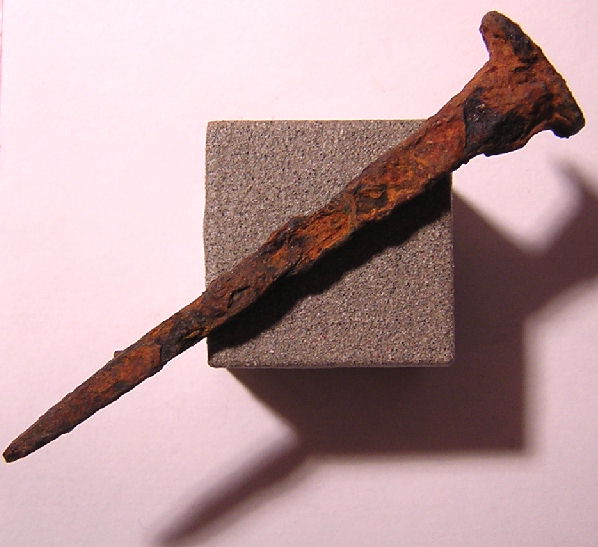
IRON NAIL |
MALLOY-1795 |
Roman iron nail from the time of Christ. Iron nails of this type were made over all parts of the Roman Empire, they were made by the millions and served various uses. Nails of this type would have been used in the Crucifixion to secure Christ's wrists to the cross.
This nail is about 7cm long and weighs 10g.
JOHN 20:25 "The other disciples therefore said unto him, We have seen the Lord. But he said unto them, Except I shall see in his hands the print of the nails, and put my finger into the print of the nails, and thrust my hand into his side, I will not believe."
POTTERY:
 |
||
|
Herodian Period c. 50 BC - AD 50 |
JUDAEA
TERRACOTTA OIL LAMP |
ADLER-91 |
Terracotta oil lamp from the time of Christ and the Apostles. This lamp was made in Judaea between 50 BC-AD 50. Lamps of this type used a rope or fabric wick and burned olive oil as a fuel. These were commonly used in everyday life for lighting homes and provide a great deal of light. Ancient homes excavated in archeological digs often have small niches in the walls for lamps of this sort. They were also used in shops, temples and public buildings and at religious events. These lamps are also often found in tombs, where they were intended to illuminate the way of the dead into the next life.
This Herodian Era lamp measures 9cm long, 6cm wide and is 3cm high. These lamps had a wheel made body and an applied nozzle. There are carbon deposits around the nozzle, it is decorated with a raised lines around the filling hole and an incuse line on the nozzle. Lamps of this era show the typical widening nozzle.
ACTS 16:29 "Then he called for a light, and sprang in, and came trembling, and fell down before Paul and Silas"
 |
||
|
Herodian Period c. 50 BC - AD 50 |
JUDAEA
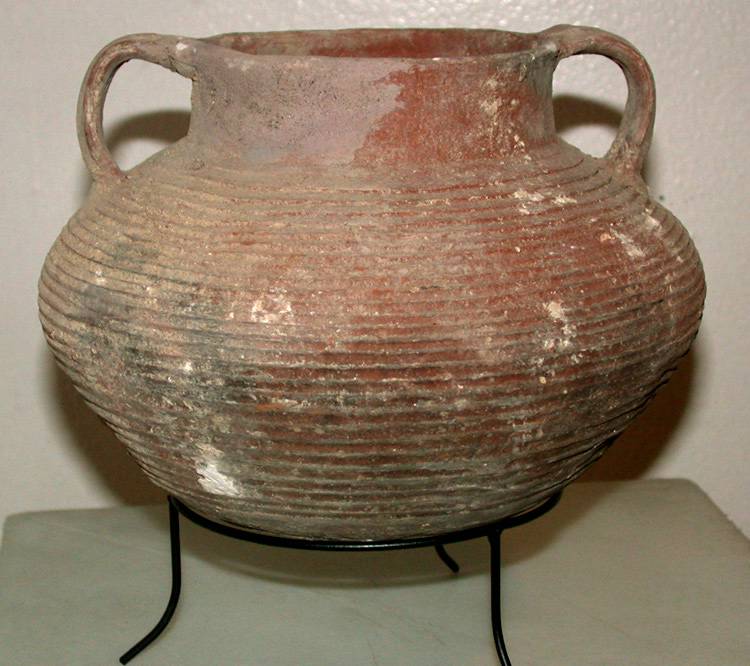
TERRACOTTA COOKING POT |
LOFFREDA-170* |
Terracotta cooking pot from the time of Christ and the Apostles. This pot would have been used to cook food over a fire and it fact is blackened from use. A pot similar to this was excavated at Capernaum from a site believed to be the home of Simon Peter.
This Herodian Era pot measures 14cm high with a diameter of 18.5cm, it is fire blackened at the base from use. There are small repairs on the side and lip.
*see also: Loffreda plate #15
JOHN 12:2 "There they made him a supper; and Martha served: but Lazarus was one of them that sat at the table with him."
 |
||
|
Herodian Period c. 50 BC - AD 50 |
JUDAEA
TERRACOTTA BOTTLE |
LOFFREDA-94* |
Terracotta flask from the time of Christ and the Apostles. Items of this type would have been used to store rare oil or perfume. Small pottery vessels were common in everyday use in ancient Israel during all periods from Neolithic times. Because it was so widely used pottery is the tool most often used by archaeologists to date sites.
This Herodian Era measures 11.5cm tall and is about 5cm wide. It was wheel-made with a ribbed body.
*see also Malloy-695
ROMANS 9:21 "Hath not the potter power over the clay, of the same lump to make one vessel unto honour, and another unto dishonour?"
 |
||
|
Herodian Period c. 50 BC - AD 50 |
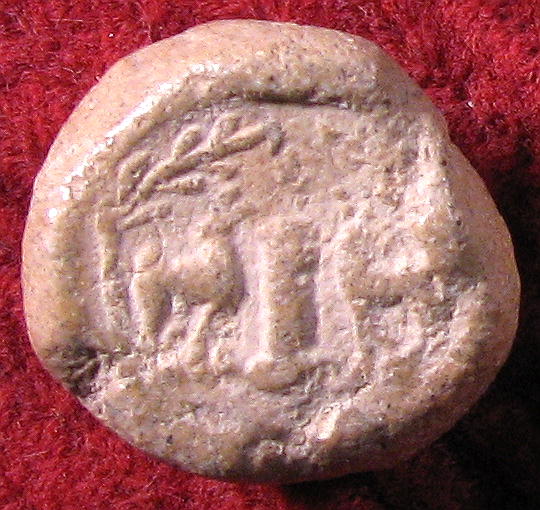
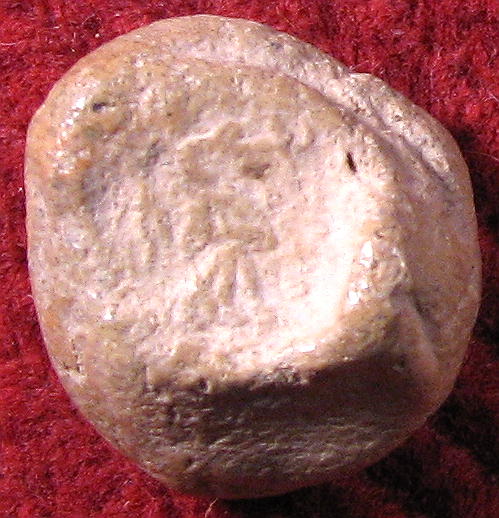
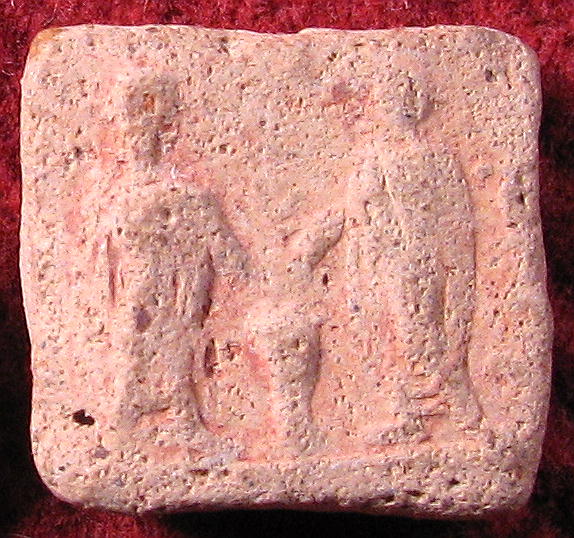
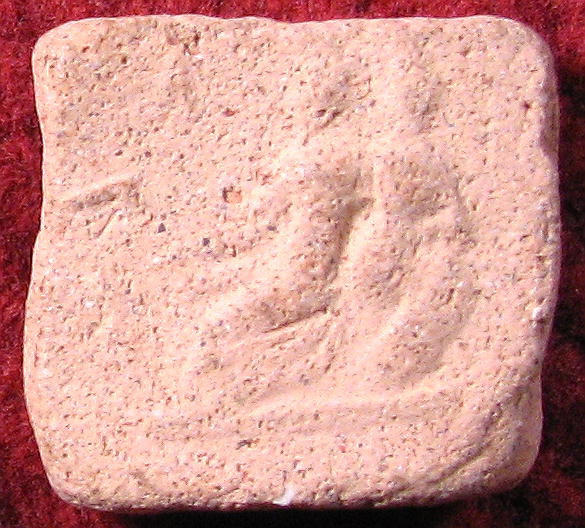
DECAPOLIS TERRACOTTA TESSERA |
STRONG & BROWN PG. 241 |
Tessera were small tokens made of terracotta, bone, lead or other materials. Items of this type were often given away to the public and served as admission tickets to various types of entertainment events held at the local amphitheater. Sometimes they could also be redeemed for gifts such as wine or money.
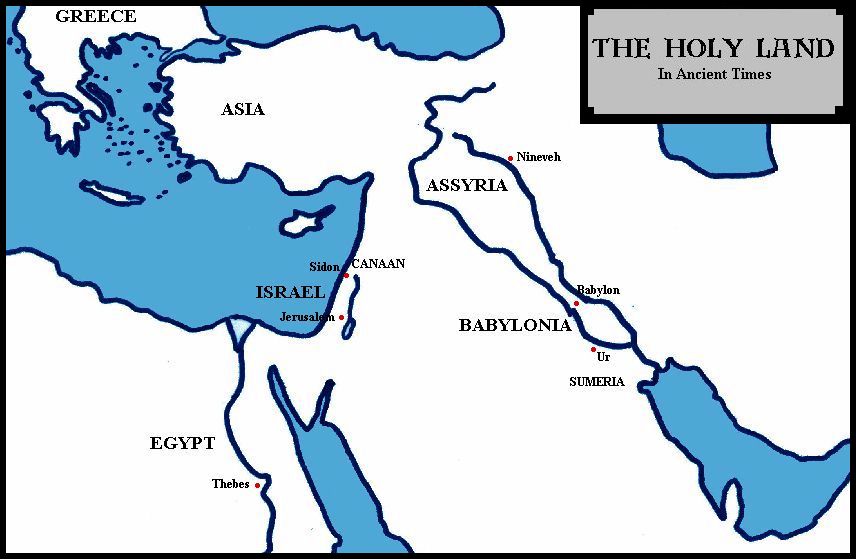
The first tessera pictured above is about 14mm in diameter and shows two stags on either side of an altar with a tree above on the obverse, the figure on the reverse is not clear, but may be a Nike. The second tessera is 15mm x 14mm and shows two togate figures on either side of an altar on the obverse and two reclining figures on the reverse. Both were found in the Decapolis region east of the Sea of Galilee.
MARK 5:20 "And he departed, and began to publish in Decapolis how great things Jesus had done for him: and all men did marvel"
BIBLIOGRAPHY OF REFERENCES USED IN THE CREATION OF THIS PAGE:
"GUIDE TO BIBLICAL COINS" - David Hendin 2010
"MONEY OF THE BIBLE" - Kenneth Bressett 2005
"OIL LAMPS OF THE HOLY LAND" - Noam Adler 2004
"COINS OF THE BIBLE" - Arthur L. Friedberg 2004
"HOLY LAND POTTERY AT THE TIME OF JESUS" - Stanislao Loffreda 2003
"A TREASURY OF JEWISH COINS" - Ya'akov Meshorer 2001
"ROMAN COINS AND THEIR VALUES" Vol. 1-3 - David Sear 2000
"GUIDE TO ARTIFACTS OF ANCIENT CIVILIZATIONS" - Alex G. Malloy 1997
JOSEPHUS: THE ESSENTIAL WORKS" - Paul L. Maier 1995
"GREEK IMPERIAL COINS AND THEIR VALUES" - David Sear 1982
"GREEK COINS AND THEIR VALUES" Vol. 1 & 2 - David Sear 1978-1979
"ROMAN CRAFTS" - Donald Strong & David Brown 1976
"ANCIENT POTTERY OF THE HOLY LAND" - Ruth Amiran 1970
"MONEYS OF THE BIBLE" - R. S. Yeoman 1961
"THE HOLY BIBLE" - Authorized Version 1611